
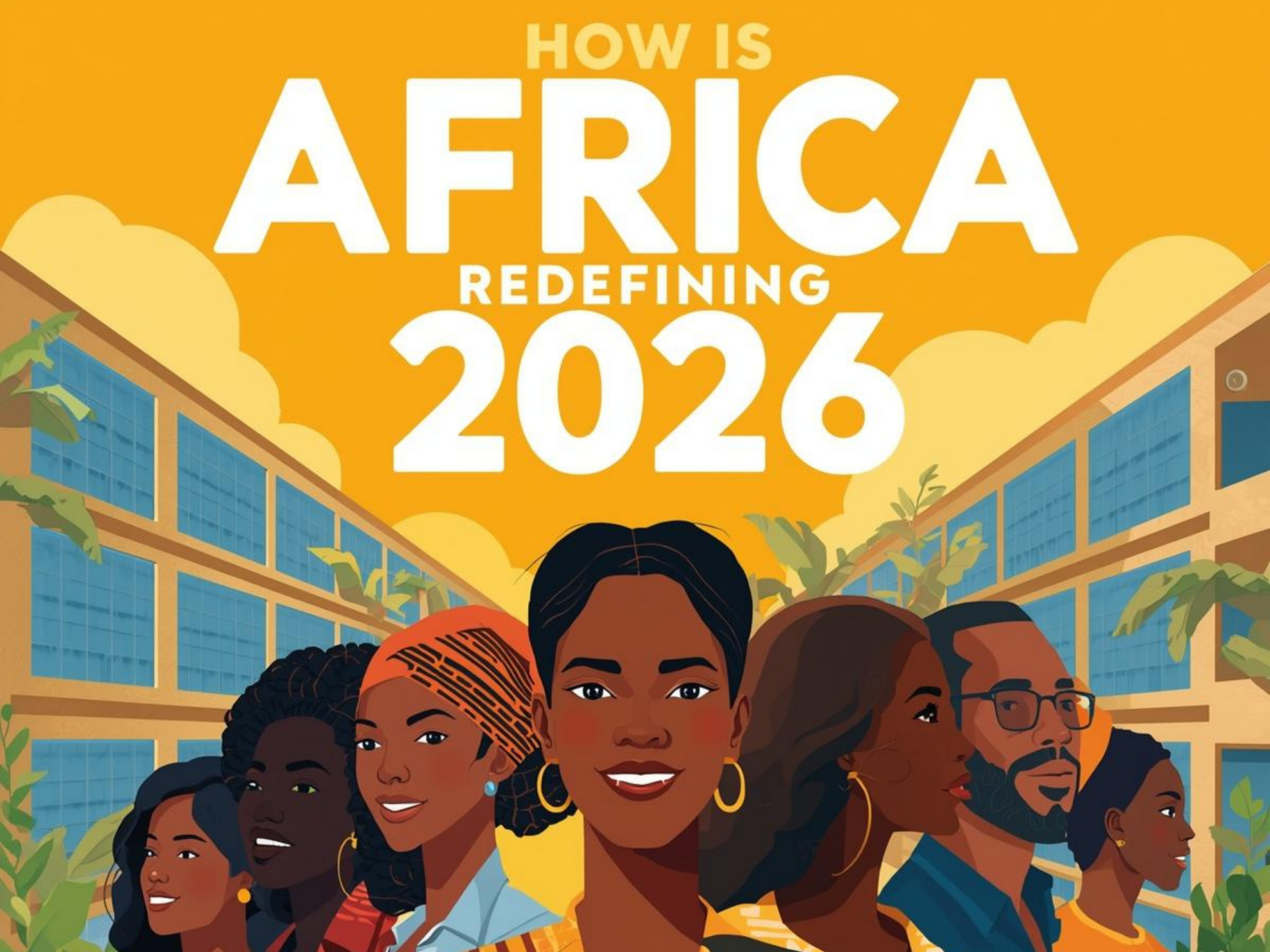
Across the continent, familiar headlines often overshadow the quieter work happening every day. Yet 2026 is already revealing a different Africa. It is an Africa that is building, imagining, and reshaping what progress can look like through the choices and creativity of its people. These are some of the narratives taking shape that we are choosing to bring into the conversation because they reflect a future defined by possibility rather than limitation.
The Rise of Green Skills and Why They Matter for Africa’s Future
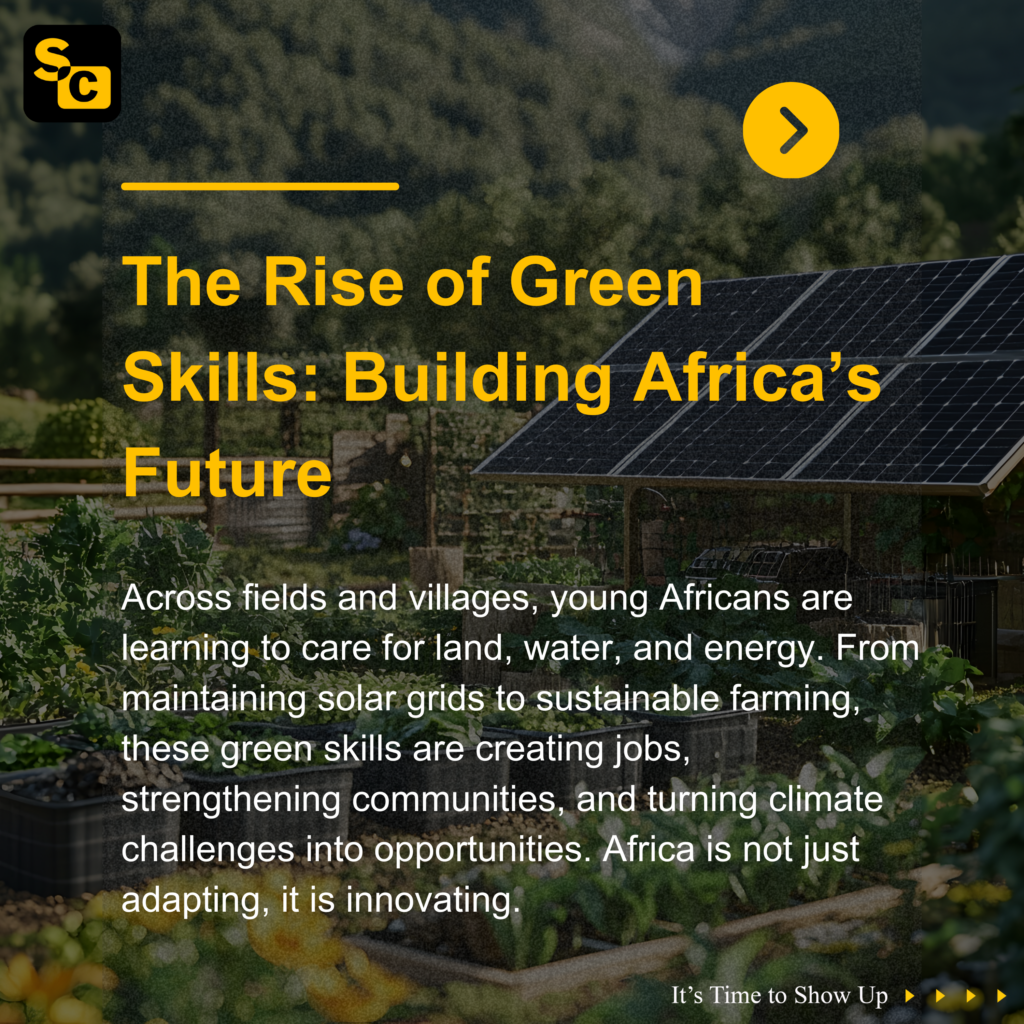
Green skills are emerging as one of the most important foundations for Africa’s next chapter. For many years, success was described through a narrow lens, in which white-collar careers were presented as the preferred path. There is nothing wrong with these ambitions, yet the reality of our time is showing that skills linked to climate resilience, clean energy, and sustainable agriculture can open doors for young people in ways that are practical, meaningful, and future-minded.
Green skills can drive poverty reduction and youth employment, with decarbonisation expected to create up to 3.8 million new jobs in Africa by 2050, including six million in emerging green industries. These skills are not abstract. They include caring for land and water, maintaining solar mini grids, supporting clean cooking systems, and managing resources with long-term thinking, among others. They help communities adapt to climate change, strengthen local economies, and create real employment. When young people learn these skills early, they learn to care for the environments that sustain them and to participate in an economy that is already taking shape across the continent.
Africa has every reason to lead in this space. Our landscapes, our creativity, and our youth hold the potential to turn green skills into green industries. This is one of the narratives the world should pay closer attention to because it reflects an Africa preparing itself with intention and confidence.
Youth-Led Digital Platforms Transforming Civic Life
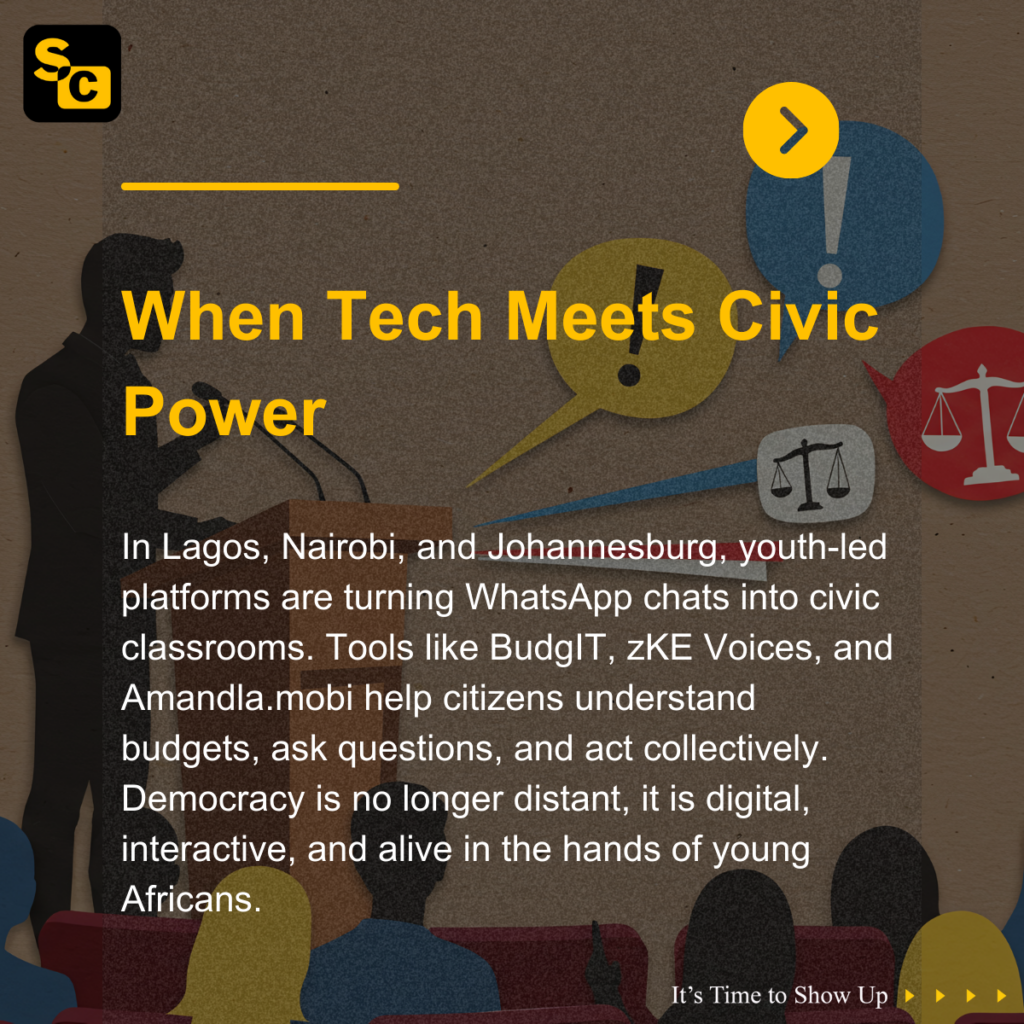
Young Africans are reshaping civic participation through simple but powerful tools. They are using technology to understand how their countries work, to ask informed questions, and to join conversations that once felt distant. A recent civic tech challenge drew over 250 youth-led applications from 30 countries, signalling a strong appetite for reshaping governance through digital tools. Platforms such as zKE Voices in Kenya are helping young people make sense of political systems and public finance in clear, accessible ways. In South Africa, Amandla.mobi is creating space for citizens to act collectively on political and social issues, and in Nigeria, BudgIT is simplifying public finance and civic information so that everyone can participate with clarity. Yiaga Africa continues to nurture political inclusion, leadership, and election integrity.
These platforms show what is possible when information becomes a shared resource rather than a barrier. They turn WhatsApp groups into civic classrooms and transform online communities into places of engagement. They enable young people to believe that their voices matter and that leadership is not reserved for the few.
In a year where several African countries will hold national elections, these digital movements will play a strong role in shaping political awareness and strengthening accountability. This is a narrative of agency, curiosity, and connection.
African Film, Literature, and Media Finding New Strength
African storytelling is experiencing a vibrant shift. For too long, African film and literature have been judged through stereotypes about quality or relevance. Yet, the reality is that our storytellers are creating some of the most thoughtful work on the global stage. They are shaping identity, preserving memory, and opening new conversations across generations and regions.
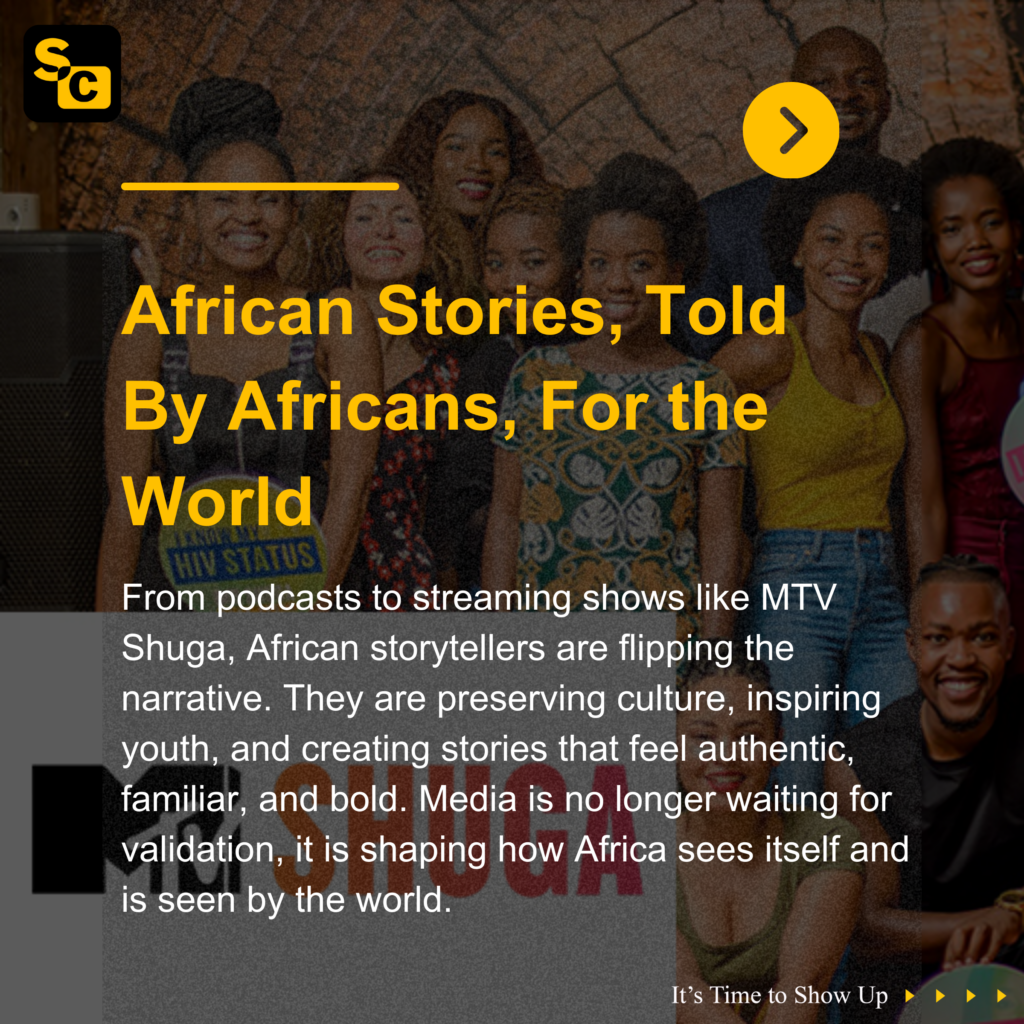
Across the continent, media habits are shifting as countries such as South Africa welcome more than a million new streaming subscribers, and video becomes the dominant form of online content, reflecting a growing appetite for African stories told in modern formats. Shows such as MTV Shuga demonstrate how entertainment can educate and inspire, reaching young audiences across borders with stories that feel familiar and honest. Writers continue to expand the reach of African literature through narratives that centre culture, imagination, and truth. Independent filmmakers and podcast creators are experimenting with new formats that reflect the everyday rhythms of African life.
These narratives matter because they allow people to see themselves with dignity. They challenge long-held assumptions and remind the world that African media is not waiting for validation. It is evolving on its own terms and speaking to its own people with strength and confidence.
Rewriting the Narrative
These narratives reveal a continent moving with intention and creativity. They sit among many others that deserve to shape how Africa is understood and discussed. The continent is defined by the courage of its citizens, the depth of its imagination, and the steady growth of ideas that are grounded in lived experience.
Rewriting the narrative is not about replacing one version of Africa with another. It is about widening the frame so that narratives of innovation, resilience, leadership, and cultural expression can be seen clearly. These are some of the narratives that should centre global conversation in 2026 and beyond.
0 Comments