
The air above the Amazon carries a familiar urgency, the same one felt across the Sahel when rains delay or in the Horn of Africa when rivers overflow. The story of our changing planet connects us all, written in heat, wind, and rising tides, reminding the world that the time for action is now.
This November, the world turns its focus to one of the most urgent pillars of the Sustainable Development Goals: Climate Action (SDG 13). Few goals capture the weight of our shared challenges so clearly. Climate action extends far beyond keeping global warming below 1.5°Celsius, the target scientists say must not be exceeded to avoid the most severe impacts of climate change. It also means protecting biodiversity, driving a just transition to renewable energy, securing finance for resilience, advancing adaptation, and safeguarding the rights of vulnerable communities.
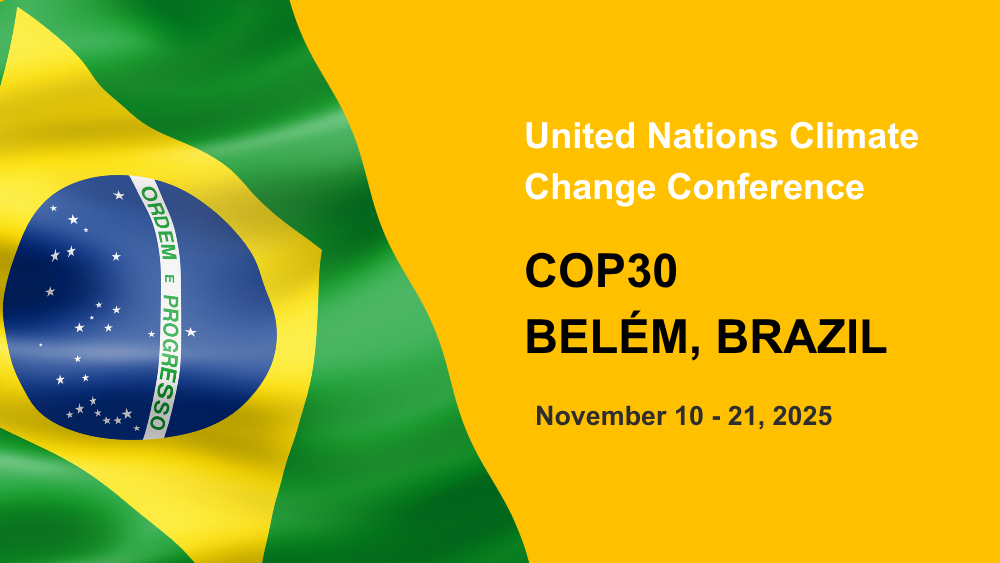
These issues take centre stage at the 2025 UN Climate Change Conference (COP 30), which will take place from 10 to 21 November in Belém, Brazil. As the largest annual United Nations conference, COP 30 will bring together governments, scientists, civil society, youth, indigenous leaders, and the private sector to accelerate climate action. The conference comes at a pivotal moment, with countries expected to present ambitious new nationally determined contributions (NDCs) aligned with the Paris Agreement, while also addressing the deep links between climate change, biodiversity loss, and sustainable development.
For Africa, the urgency is both clear and personal. The continent is home to some of the world’s fastest-warming regions, where communities face climate shocks ranging from prolonged droughts to devastating floods. At the same time, these communities are also driving bold solutions. For instance, Kenya stands out as a global leader in renewable energy, with more than 90% of its electricity generated from clean sources. Across the continent, communities are innovating with drought-resistant crops and solar-powered irrigation systems, showing that resilience and growth can go hand in hand. Still, people in arid and semi-arid lands, informal settlements, and along fragile coastlines remain on the frontline of climate shocks that threaten lives and livelihoods. Their experiences serve as a reminder that climate action must be grounded in justice and inclusivity.
Communication is central to any transformation, and Africa’s experience shows that climate solutions work best when people see themselves in the story. For instance, when a farmer understands how solar irrigation saves a harvest, or when a community sees forests restored and livelihoods renewed. We work to ensure Africa’s voice is heard not only as a region hardest hit by climate change, but as a leader offering solutions the world can learn from. Communication connects science with everyday realities, turning abstract commitments into human stories that inspire and mobilise action; the kind of voices that lead change on the ground.
As leaders gather in Belém, Africa’s voice must remain strong: climate justice is not optional; it is essential. The solutions being built across the continent deserve recognition, resources, and scale. COP 30 is not only a moment to negotiate; it is a moment to amplify the courage and clarity of those already driving change on the ground.
0 Comments
Trackbacks/Pingbacks