
In the early 1970s, three member states of the United Nations – India, Mexico and Kenya competed to host the headquarters of the newly established United Nations Environment Programme (UNEP). Kenyan representatives lobbied for Nairobi, leading to its selection. This position not only made UNEP the first major headquarters established in the Global South, but also changed Nairobi’s role in global diplomacy. Over time, the UN presence grew in Nairobi as more organisations, including UN-Habitat, established operations, eventually leading to the United Nations Office at Nairobi (UNON), which is located on 140 acres near Karura Forest in Gigiri.
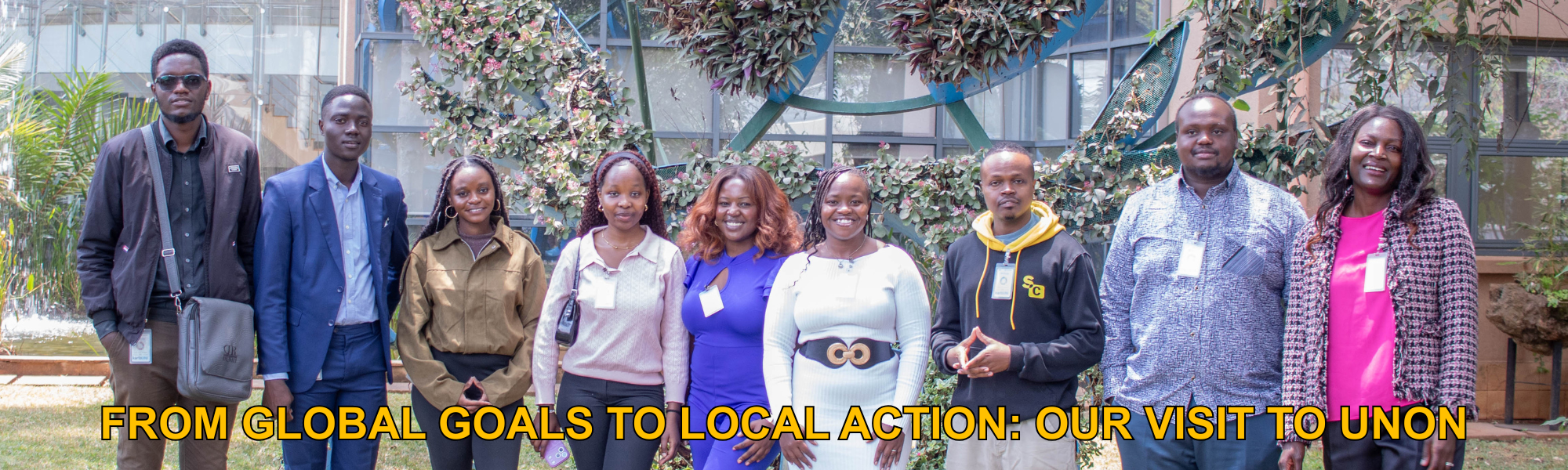
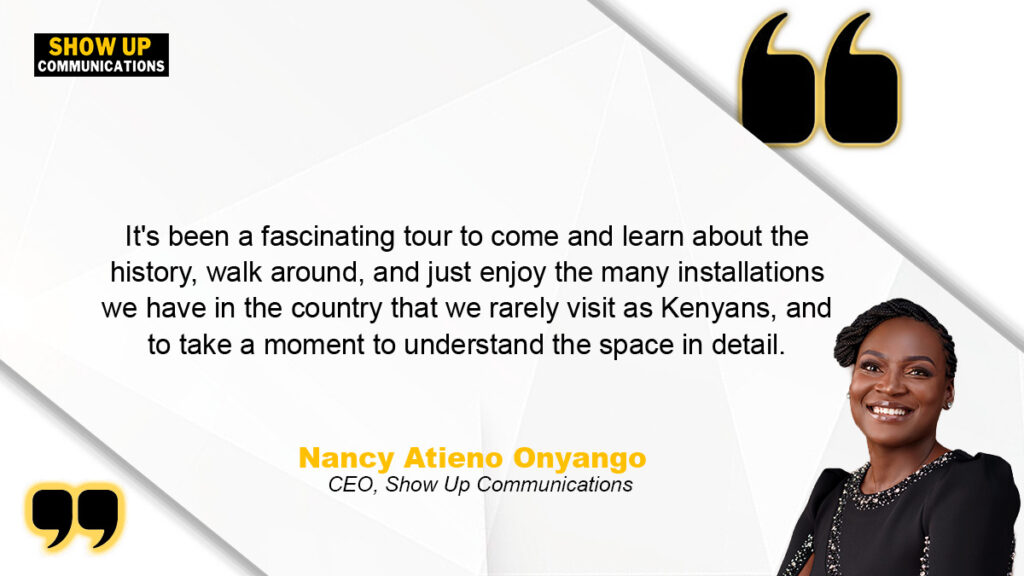
Our team’s visit on 20th August offered more than a tour of the UNON compound. It was an opportunity to see how global institutions translate complex development priorities into spaces, conversations and stories that reach people across cultures and languages.
Our tour started with a walk between the 195 flags, arranged from Afghanistan to Zimbabwe, with 193 representing the UN member states and two representing non-member observer states, Palestine and Vatican City. The flags and the white-and-blue KARIBUNI sign, situated on the lawn, brought a sense of inclusivity, equality, and a blend of global and local identity.
Inclusivity, Equality and Global Representation
Behind the UNON walls, the workforce brings together people and institutions from across the world, reinforcing its international character. According to our tour guide, Derick Mutiria, the UN system has approximately 6,500 staff members in Kenya, representing 177 countries. Contrary to the common perception, the UN is more than a single organisation. It is made up of various funds, agencies, and programmes committed to different development sectors, but with one goal: to address shared global challenges and improve the lives of people around the globe.
However, representation at the UNON is more than bringing people and institutions together. Its efforts extend to ensuring everyone can access, participate in and engage with the spaces and conversations behind the walls. A visit to the conference rooms gave us a glimpse of this. From Braille signage that supports the visually impaired to accessibility features that enable wheelchair users to access the stage, the physical environment reflects an effort to make participation more inclusive.
Sign language interpreters help make the discussions accessible to people who are deaf, while the UN’s six official languages: Arabic, Chinese, English, French, Russian and Spanish are used in publications and discussions, breaking the language barriers.
When spaces tell the story
A deeper tour around the UNON offices and environs gave us a clear understanding of the issues addressed by the various organisations. The UN has many different blocks, and each addresses a different goal: from environmental protection and sustainable cities to humanitarian assistance, food, and women and children. These different priorities are tied to the 17 Sustainable Development Goals (SDGs), adopted in 2015 as a shared framework for addressing global challenges. As Derick explained what each organisation covered, the goals felt less like a list of objectives and more like ideas being translated into action around us.
For one of our colleagues, the commitment to sustainability throughout the compound was a highlight of the tour. Solar panels supply energy to various services, while renewable energy is increasingly being integrated into the UN’s operations.
Derrick noted that the United Nations is also working to increase its use of renewable energy and electric vehicles. Surrounded by greenery and connected to the Karura Forest ecosystem, the compound features tea and coffee gardens, fish ponds, and wildlife, such as monkeys. Our guide shared that over 3,200 trees have been planted on the grounds.
For one of our colleagues, the compound’s greenery offered a different kind of connection to Kenya’s history. Among the trees planted, there were some by notable Kenyan figures, including Wangari Maathai and Mwai Kibaki.
Each structure within UNON had a story and a commitment to communicate. Around the compound, sculptures and structures stood, carrying strong messages. One that stood out was an index-finger sculpture donated by the Republic of Chile in 1988. Beyond its physical presence, the sculpture carries an environmental message, reminding visitors that global issues can also be communicated through symbols and shared spaces. The tour lasted one hour, but the knowledge and insights gained as communications professionals were invaluable.
Just like every piece of information, symbol, and feature we encounter in our work, the UNON grounds convey messages beyond just publications and reports. The flags represent diversity; the languages emphasise accessibility; the design of the spaces promotes inclusion; and the environment reflects sustainability. The visit was not only a UNON tour, but also an opportunity to observe how global institutions translate their values into experiences that people can see, hear, and engage with.
0 Comments