
One child dreams of becoming the next African innovator, while another walks miles to reach a classroom. A young girl discovers a world of endless possibilities online, unaware of the dangers lurking behind the screen. Three childhoods, three different realities, with one shared reality: every child deserves a future that is not determined by the circumstances into which they were born.
UNESCO estimates that about 118 million children, adolescents and young people across Africa are out of school. Millions more face poverty, violence, exclusion and growing digital threats. The uncomfortable conversation International Children’s Day brings to the forefront reminds us of the commitments made under the United Nations Convention on the Rights of the Child. Every child has a right to education, protection, healthcare, participation and an environment in which they can develop and thrive. Yet, for millions of children, these rights remain promises waiting to be fulfilled.
The education gap is one of the clearest illustrations of this inequality. UNESCO’s 2025 Africa SDG 4 Scorecard estimates that 118 million children, adolescents and young people across Africa are out of school. For a child, missing school can mean losing access to opportunity, protection, confidence and the possibility of a different future. Poverty deepens this challenge. UNICEF’s State of the World’s Children 2025 estimates that 412 million children globally live in extreme monetary poverty, surviving on less than 1 US dollar a day. These realities remind us that innovation means little if millions of children still struggle to access necessities.
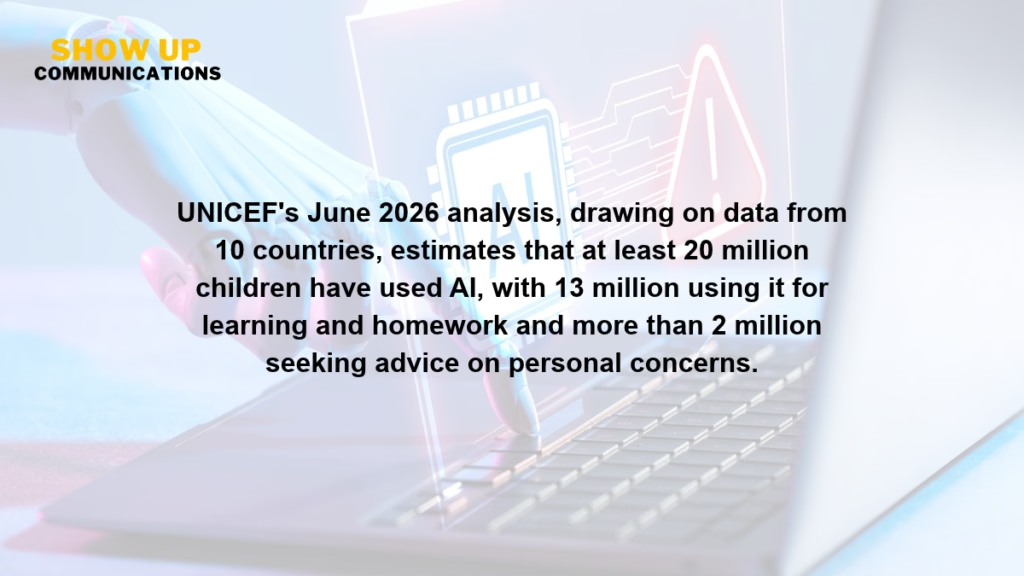
The challenges facing children are increasingly unfolding on screens. The digital world has opened doors to learning, creativity and connection, but it has also created new spaces for exploitation, manipulation and abuse. A September 2026 UNICEF report estimates that 20 million children aged 12–17 across 21 countries, almost one in five surveyed internet-using children, experienced at least one form of technology-facilitated sexual exploitation or abuse in a single year. More troubling, fewer than 1% of these experiences were reported to authorities. This exposes a difficult truth: the same digital spaces children turn to for learning and entertainment can become places where their safety and dignity are compromised.
The consequences extend beyond physical safety. Children’s emotional and psychological well-being deserves equal attention. The World Health Organisation estimates that one in seven adolescents aged 10–19 experiences a mental health condition. Anxiety, depression, bullying, violence, social exclusion and pressure to conform can quietly shape a child’s experience of growing up. When children cannot speak or feel safe, their struggles can follow them into adulthood. Protecting childhood must include listening to children, recognising their emotional needs and creating environments where asking for help is never treated as weakness.
As artificial intelligence becomes part of everyday childhood, a new chapter is unfolding. Children are no longer simply preparing for a digital future; they are already living in one. UNICEF’s June 2026 analysis, drawing on data from 10 countries, estimates that at least 20 million children have used AI, with 13 million using it for learning and homework and more than 2 million seeking advice on personal concerns. AI can personalise learning, support children with disabilities, encourage creativity and help bridge language barriers. However, it also raises difficult questions about privacy, misinformation, algorithmic bias and children’s dependence on technology.
More importantly, African children must not be treated merely as consumers of technologies developed elsewhere. UNICEF’s September 2026 report, Skills for an AI World, draws on consultations with 97 children aged 9–17 across five African countries: the Democratic Republic of the Congo, Egypt, Mozambique, Rwanda and Senegal. Their perspectives highlight the importance of critical thinking, information literacy, digital safety, privacy and the ability to question what AI produces. This presents an important opportunity for Africa: preparing children not just to use technology, but to become its creators, innovators and responsible decision-makers.
This responsibility extends to governments, parents, caregivers and technology companies. Digital literacy should become part of education, online platforms should be safer by design, children’s personal information should be protected, and AI systems should be developed with their best interests in mind. Children must have a voice in decisions affecting their digital lives. Article 12 of the UN Convention on the Rights of the Child recognises their right to express their views freely on matters affecting them. Their experiences, fears, ideas and aspirations should therefore inform the technologies and policies being designed around them.
0 Comments