
Nearly 80% of young people now use artificial intelligence every day, yet 85% of people worldwide worry about the growing spread of online misinformation. In a world where AI can create content in seconds, the greatest challenge is no longer finding information; it’s knowing what to trust. Global Media and Information Literacy Week calls for equipping every digital citizen with the critical thinking skills needed to navigate an AI-powered world.
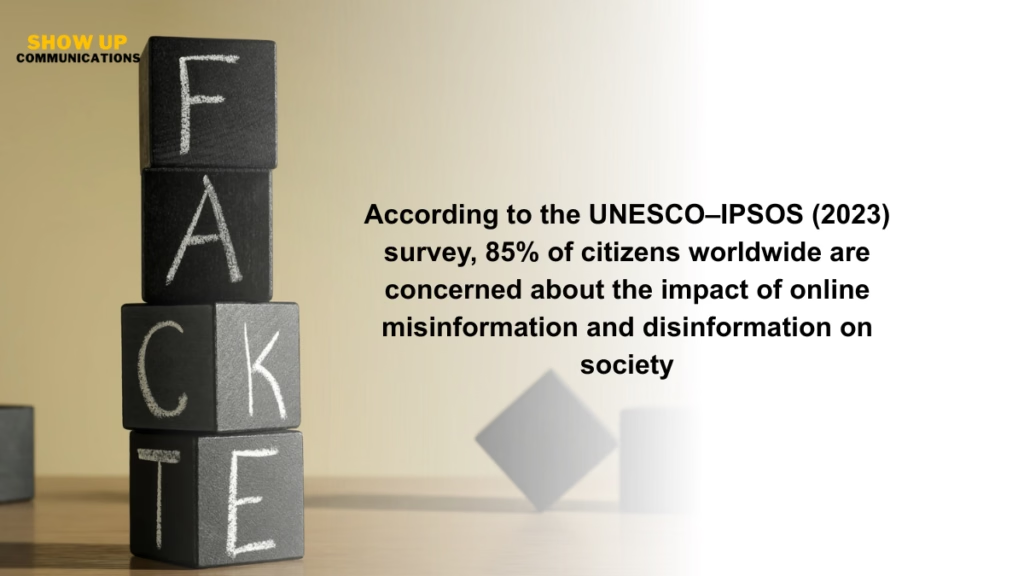
Artificial intelligence can now write essays, generate lifelike images, mimic human voices and produce videos so convincing they can blur the line between fact and fiction. While these innovations are transforming education, healthcare, journalism, and business, they also create unprecedented opportunities for misinformation, disinformation, and digital manipulation. According to the UNESCO–IPSOS (2023) survey, 85% of citizens worldwide are concerned about the impact of online misinformation and disinformation on society, highlighting why Media and Information Literacy has become a global priority.
Global Media and Information Literacy Week, observed annually from 24 to 31 October, is a global movement that champions one of the most valuable skills of the 21st century: the ability to think critically in a world overflowing with information. In 2025, UNESCO’s Global MIL Week took place under the timely theme, “Minds Over AI – MIL in Digital Spaces.” The key message was, as artificial intelligence continues to evolve, human intelligence, guided by ethics, critical thinking and informed judgement, must remain at the centre of every digital decision.
UNESCO 2024 report indicates that two-thirds (62%) of digital content creators do not consistently verify information before publishing it online. Media and Information Literacy equips people with the skills to pause before sharing, verify before believing and analyse before reacting. It encourages individuals to ask essential questions: Who created this content? Why was it created? Is the source credible? What evidence supports the claim?
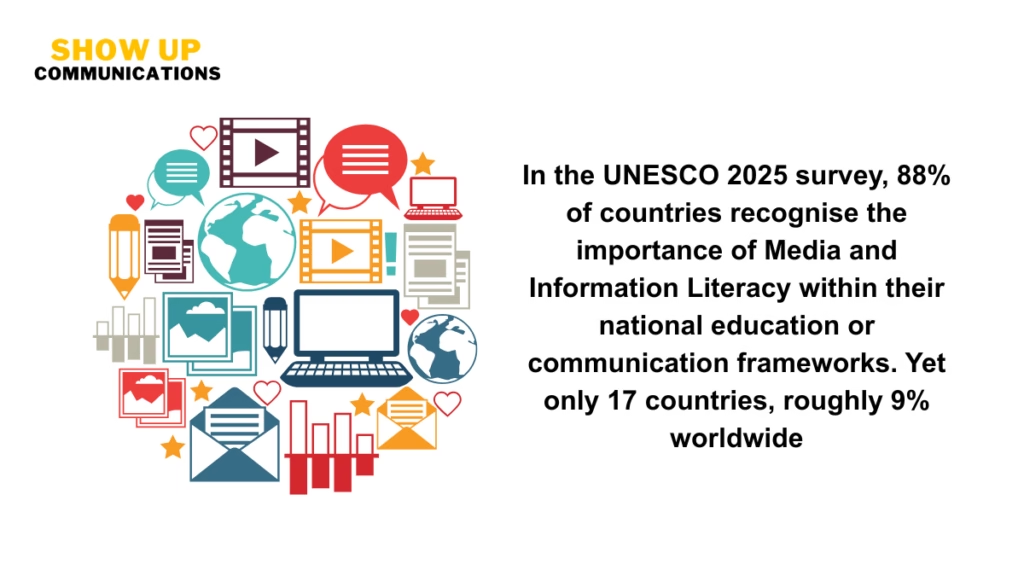
In the UNESCO 2025 survey, 88% of countries recognise the importance of Media and Information Literacy within their national education or communication frameworks. Yet only 17 countries, roughly 9% worldwide, have adopted dedicated standalone Media and Information Literacy policies. This reveals a significant gap between recognising the importance of media and information literacy (MIL) and putting comprehensive strategies into action.
At the same time, artificial intelligence is evolving at a pace that challenges governments, educators, media organisations and technology companies alike. Generative AI tools can create convincing articles, realistic photographs, synthetic voices and highly persuasive videos within seconds. While these innovations offer enormous opportunities for creativity and productivity, they also make misinformation increasingly difficult to detect.
Artificial intelligence is already transforming lives for the better. UNESCO has been used to innovate teaching and learning practices, support medical research, accelerate scientific discoveries, improve accessibility for people living with disabilities, enhance disaster response, enable personalised learning, and help journalists analyse complex datasets more efficiently than ever before.
Global Media and Information Literacy Week reminds us that governments alone cannot build trustworthy digital spaces. Technology companies must prioritise transparency and accountability. Educational institutions must integrate Media and Information Literacy into lifelong learning. Media organisations must continue strengthening ethical journalism. Families must encourage healthy digital habits. Young people must be equipped not only to use technology but also to understand its influence. Each of us has a role in protecting truth, promoting dialogue, and cultivating informed communities.
In an era increasingly shaped by artificial intelligence, the world’s greatest innovation may not be the machines we build, but the minds we nurture. When truth competes with manipulation and information with misinformation, the most powerful technology has never been artificial. It has always been an informed human mind.
0 Comments