
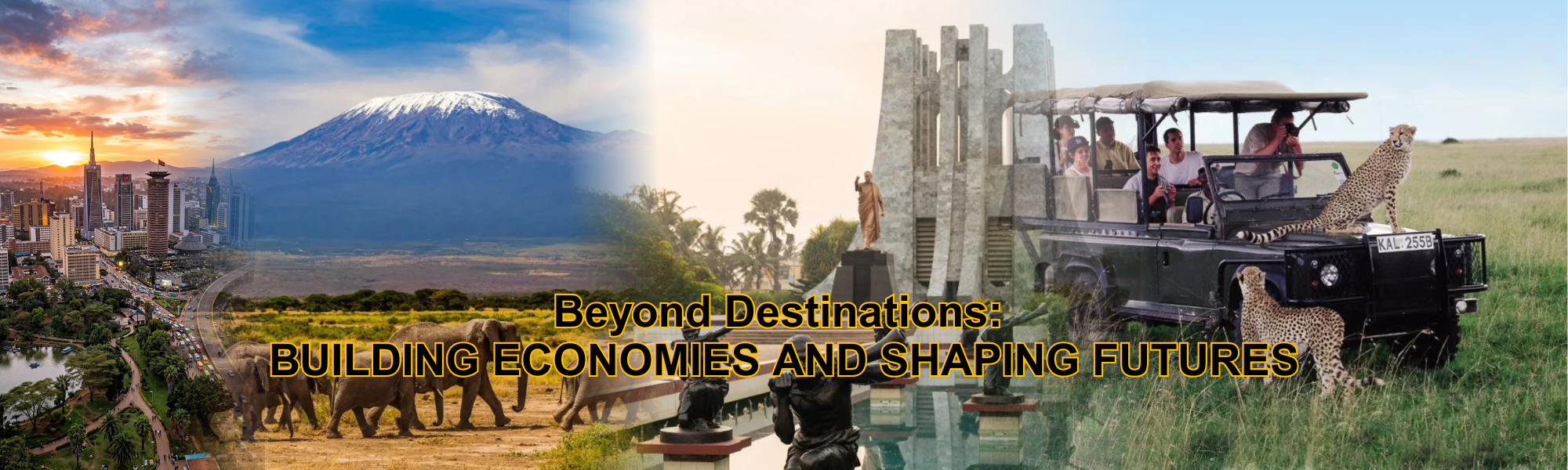
The global tourism industry has demonstrated remarkable resilience in recent years. According to the World Travel & Tourism Council, travel and tourism are projected to contribute approximately USD 12 trillion to the global economy in 2026, representing nearly 10% of global GDP and supporting 376 million jobs worldwide. In her statement, Amani Abou-Zeid, AU Commissioner for Infrastructure, Energy and Tourism, said, “The value of the industry now stands at over 160 billion U.S. dollars, accounting for almost 8% of GDP, thus exceeding the contributions from manufacturing and banking sectors.” This growth is expected to outpace the broader global economy, underscoring tourism’s growing importance as an engine of development and investment.
According to the Kenya Association of Travel Agencies, Morocco currently leads Africa’s tourism rankings, attracting approximately 17.4 million international visitors annually. The country’s success stems from its combination of cultural heritage, historical architecture, coastal destinations, and accessibility to European markets. Egypt continues to benefit from its globally recognised archaeological sites and historical significance, while South Africa maintains its position as one of the continent’s most diverse tourism destinations. Countries such as Kenya, Tanzania, Mauritius, Namibia, Botswana, and the Seychelles have also established strong tourism brands by leveraging their unique natural and cultural assets. These achievements show that successful tourism emerges from combining infrastructure, destination management, conservation, marketing, and visitor experience into a cohesive offering.
Kenya and South Africa also continue to attract international attention as premier destinations for both traditional and contemporary tourism experiences. Kenya offers globally celebrated safari destinations such as the Maasai Mara, where the Great Migration remains one of nature’s most spectacular events. South Africa combines wildlife encounters with urban tourism, wine regions, coastal attractions, cultural experiences, and adventure tourism. Analyses by Tripzapp note that the distinction between the two destinations is shifting less from choosing one over the other and more toward understanding the distinct experiences each offers within a broader African tourism narrative.
According to the African Union, the tourism industry employs over 21 million people across Africa, accounting for 6.5% of the continent’s total workforce. These people support millions of livelihoods through hotels, restaurants, transportation networks, tour operators, artisans, cultural institutions, and countless small businesses that rely on visitor spending.
Across Kenya, South Africa, Nigeria, Ghana and other African countries, youth-led businesses are increasingly shaping tourism through digital platforms, content creation, tour operations, hospitality ventures, and innovative travel services. The rise of social media has amplified the visibility of once-overlooked destinations, allowing local entrepreneurs to reach global audiences without relying solely on traditional marketing channels. As a result, tourism is becoming more decentralised, with smaller communities gaining opportunities to benefit from visitor spending and international exposure.
Beyond its economic contribution, tourism also plays a critical role in cultural preservation. Historic landmarks, traditional practices, languages, festivals, cuisine, and artistic traditions often gain renewed relevance when they become part of a destination’s tourism offering. In many communities, tourism provides both the incentive and financial resources necessary to preserve cultural heritage for future generations. This relationship creates a powerful cycle in which cultural identity strengthens tourism appeal, while tourism revenue supports cultural preservation.
However, tourism’s potential cannot be fully realised without addressing sustainability questions. Rapid growth brings both opportunities and challenges. Environmental pressures, infrastructure demands, resource management concerns, and unequal benefit distribution can undermine long-term success if left unaddressed. Across many tourism destinations, stakeholders are increasingly recognising that growth measured solely by visitor numbers is insufficient. Sustainable tourism requires balancing economic gains with environmental protection, social inclusion, and community wellbeing.
The future of tourism will likely be defined not by the destinations that attract the most visitors, but by those that create the greatest value for people, communities, and ecosystems. This requires investments in infrastructure, technology, skills development, environmental management, and destination innovation. It also requires recognising that tourism’s greatest strength lies in its ability to create connections between visitors and hosts, cultures and communities, heritage and innovation, and local experiences and global audiences.
World Tourism Day therefore serves as more than a celebration of travel. It is a reminder of tourism’s extraordinary capacity to transform economies, preserve cultures, support livelihoods, and inspire global understanding. From the bustling streets of Marrakech to the plains of the Maasai Mara, from the coastlines of Mauritius to the vineyards of South Africa, tourism continues to demonstrate that cross-border movement can generate benefits that extend far beyond the journey itself.
As global tourism enters a new era of growth and transformation, South Africa, Kenya, Egypt, Morocco, Zimbabwe, Zanzibar, Tanzania and other top African tourism countries stand poised to play an increasingly influential role in shaping the industry’s future. Its natural wonders, cultural richness, entrepreneurial energy, and youthful population position it as one of the most dynamic tourism regions in the world. The challenge moving forward is not simply to attract more visitors, but to ensure that tourism creates lasting opportunities, protects the resources that make destinations unique, and contributes meaningfully to sustainable development.
0 Comments
Trackbacks/Pingbacks