

For decades, Africa has produced leading communicators who have shaped public opinion, built brands, supported democracy, and shared the continent’s story globally. This influence raises a key question: who sets the standards for those shaping public discourse?
Announced on World PR Day 2026 by a coalition of African professional communication associations, the Africa Declaration marks a significant step toward shared professional standards, ethical accountability, and stronger self-governance across Africa’s communications industry.
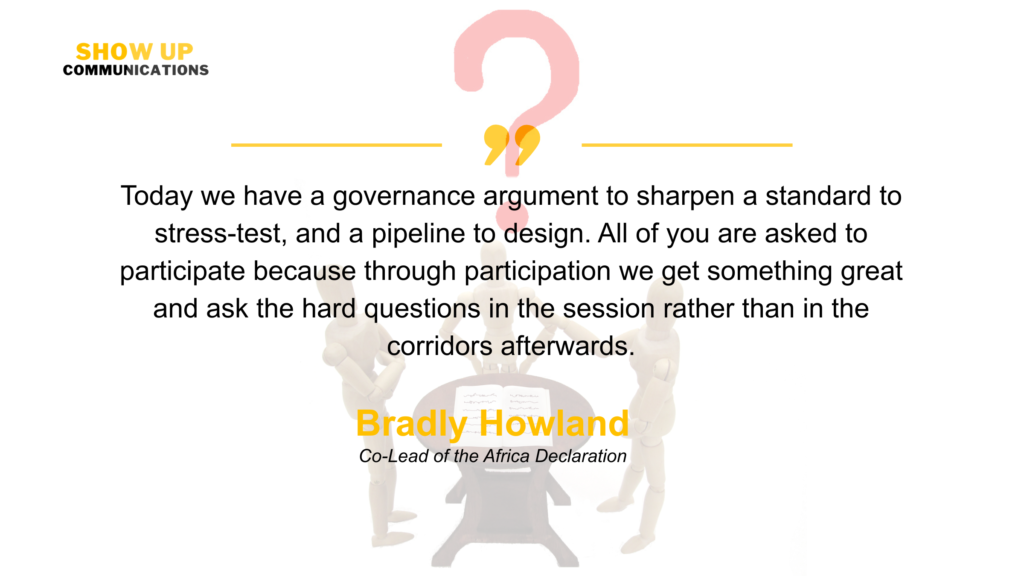
At a time when misinformation travels fast, digital platforms have transformed how information flows, and artificial intelligence reshapes the profession; trust has become one of Africa’s most valuable assets. The quality and integrity of communication now influence elections, investment, public health, institutional credibility, and even self-perception. The Africa Declaration is that professionalisation should not mean importing a model developed elsewhere and imposing it on African practitioners.
The Declaration has been deliberately developed around African realities, recognising the continent’s diverse regulatory systems, professional institutions, and communication environments. It sets out eight founding principles, six institutional commitments, and a ten-point collective action plan. Work intended to make professional standing visible and verifiable.

Under the proposed system, practitioners who belong to participating professional bodies, meet ongoing development requirements, and commit to a shared ethical code will be recognised across signatory markets. The credential is portable, renewable, and visible to employers, governments, and clients.ns for a profession that increasingly operates across borders. A communications consultant in Nairobi may work for a client in Lagos. A PR agency in Johannesburg may manage a campaign reaching audiences in Accra and Kigali. A strategic communicator in Lusaka may find themselves working with international organisations operating across several African markets. In such an environment, professional standards cannot remain confined within national borders.
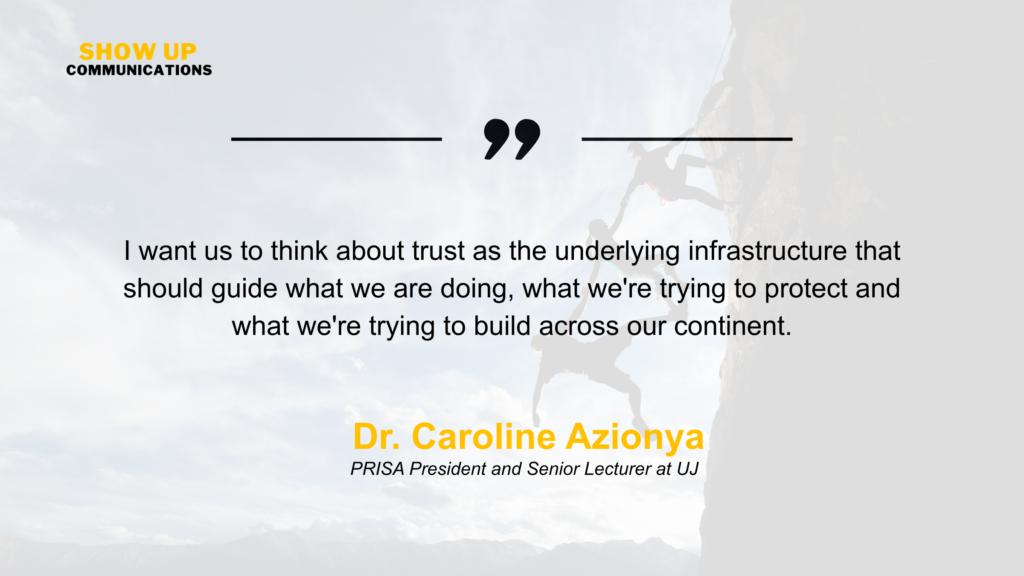
Professionalisation is ultimately about trust
The debate around professionalisation can sometimes sound like institutional accreditation, membership, codes. Discussions about professionalisation often focus on accreditation, membership, codes, qualifications, and regulation. However, at the core is something more fundamental: public trust shapes narratives; their decisions can have consequences far beyond a communications department.
Misleading campaigns can damage reputations. Poor crisis communication can increase public anxiety. Manipulated information can distort debate. Unethical communication can undermine confidence in institutions.
The Public Relations Society of Kenya, one of the founding voices behind the initiative, has linked professionalisation directly to trust, ethics and accountability, arguing that communicators must be recognised as professionals responsible to the societies they serve.
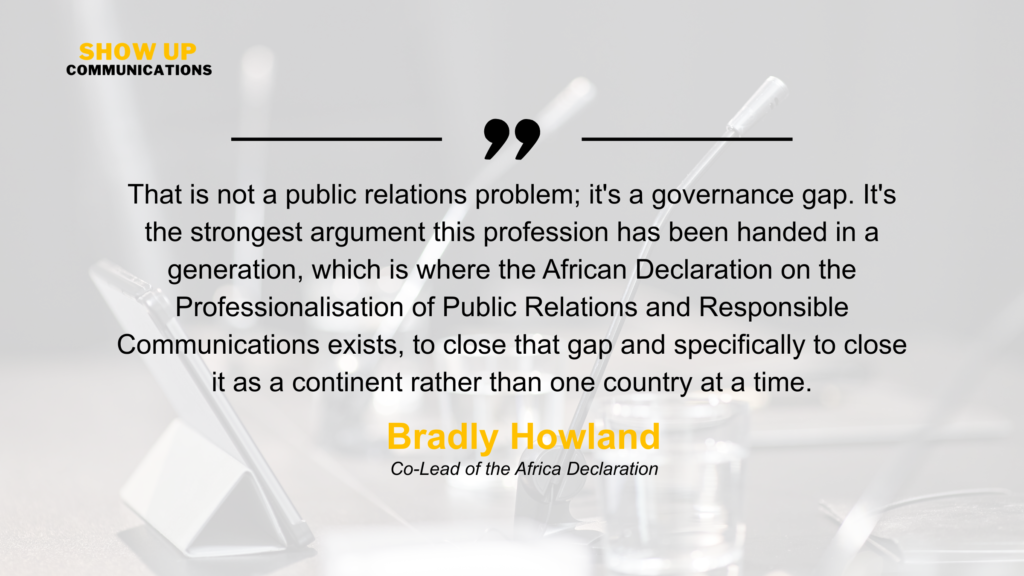
Africa is undergoing rapid digital transformation. Millions now access news, entertainment, political information, and commercial content through digital platforms. Artificial intelligence is also lowering costs and increasing the speed of content production. As a result, distinguishing credible information from manipulation is increasingly difficult. Professional standards cannot be an afterthought.
Africa should not professionalise to catch up
Africa has a rapidly expanding communications ecosystem, a young and digitally connected population, increasingly sophisticated businesses and institutions, and a growing creative economy. The continent also brings communication traditions that cannot always be captured by imported frameworks.
“Africa is not professionalising its communications industry simply to catch up; it is doing so to lead.” Bradly Howland, Co-Lead of the Africa Declaration and Immediate-Past President of PRISA
African communication is shaped by multilingualism, oral traditions, community structures, cultural diversity and different understandings of authority and trust. A continental professional framework, therefore, needs to reflect these realities rather than treat them as exceptions to a global norm. The Africa Declaration provides an opportunity to build precisely that kind of framework.
The next challenge is implementation
The future of communications is increasingly multidisciplinary. Journalism, public relations, digital marketing, content creation, strategic communications, social media management, data analytics and artificial intelligence are converging.
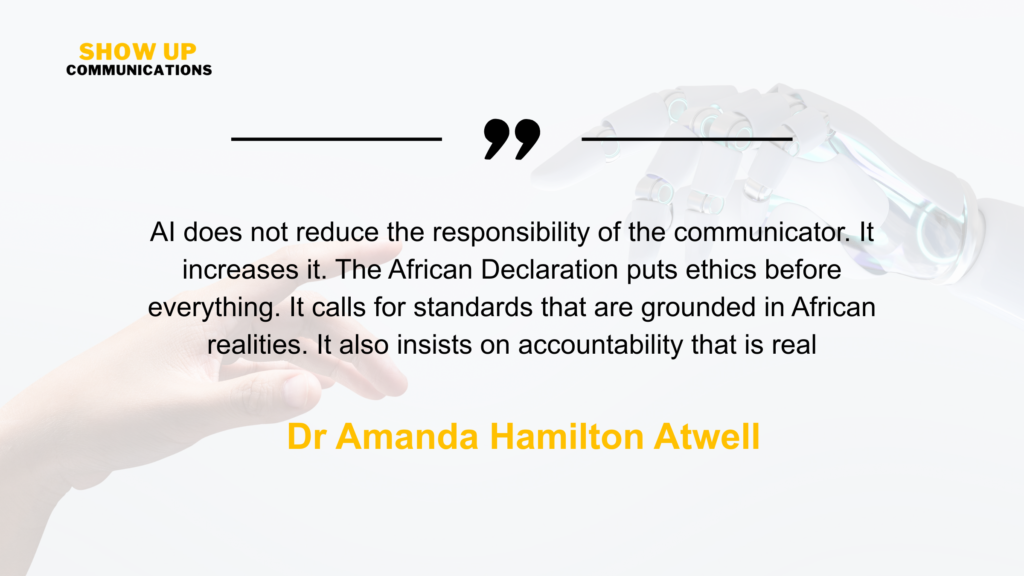
Building an African voice in global communications. For too long, Africa’s contribution to global conversations about communication has often been discussed through the lens of development challenges, misinformation, digital inequality, weak institutions or limited media resources. It positions African communication professionals not merely as recipients of global standards but as co-creators of the profession’s future.
The support from international bodies, including the Global Alliance for Public Relations and Communication Management, reinforces the initiative’s global relevance. The Global Alliance represents more than 360,000 communication professionals across 126 countries and has described the Declaration as a landmark achievement in advancing ethical practice and professional standards.
This is significant because Africa’s communications challenges are increasingly global in nature. Misinformation crosses borders. Artificial intelligence does not stop at national boundaries. Digital platforms connect audiences across continents. Reputation moves instantly between markets. The response must therefore be equally connected.
A new chapter for African communicators
The Africa Declaration is ultimately more than a public relations document. It is a statement about the kind of communications profession Africa wants to build. One that values competence alongside creativity. One that treats ethics as a professional obligation rather than a slogan. One that recognises continuous learning as essential in a rapidly changing industry. And one that understands that communication carries consequences. The formal signing and launch of the Declaration is expected to take place at the World Public Relations Forum in Abuja, Nigeria, in November 2026, giving signatories an opportunity to move from commitment to implementation.
The journey ahead will require more than professional bodies. Governments, universities, employers, agencies, media organisations, civil society and individual practitioners will all have a role to play. Because the future of African communication will not be determined simply by how many people can create content. It will be determined by how responsibly they use the power to communicate. Africa has never lacked stories.
0 Comments
Trackbacks/Pingbacks