
On World Press Freedom Day, the world pauses to reflect on a principle that underpins every functioning democracy: the right to seek, share, and access information without fear. It is a day marked by statements of solidarity and renewed commitments. Yet, behind these declarations lies a stark and sobering reality. Journalism, often described as a public service, continues to demand an extraordinary price from those who practice it.
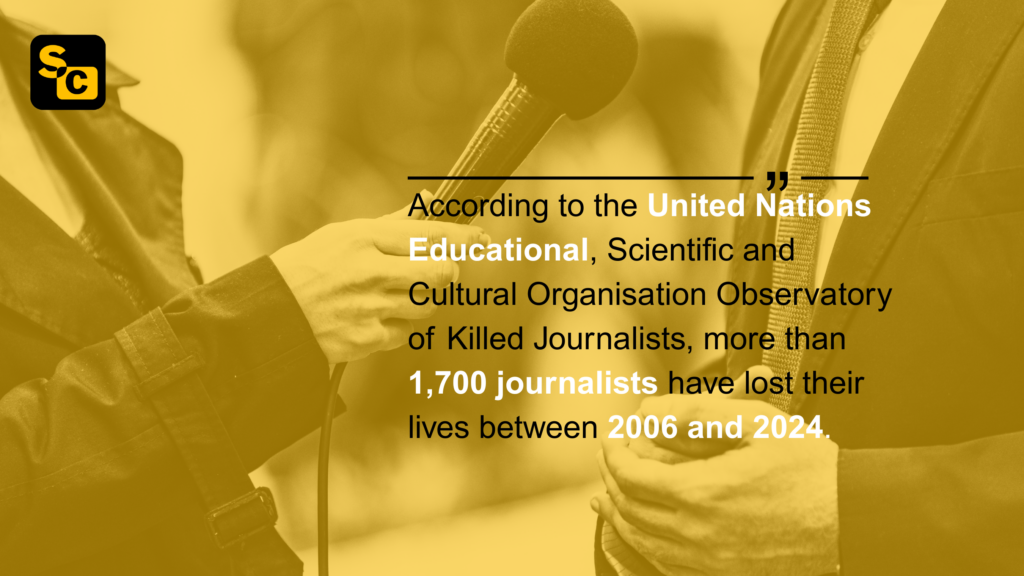
According to the United Nations Educational, Scientific and Cultural Organisation Observatory of Killed Journalists, more than 1,700 journalists have lost their lives between 2006 and 2024. What is perhaps even more alarming is that nearly 90% of these cases remain unresolved, pointing to a persistent culture of impunity that undermines both justice and deterrence. Each statistic represents a silenced voice, a reporter who set out to inform the public but instead became part of the story they were trying to tell.
In Sub-Saharan Africa, the risks are not abstract. Data from the International Press Institute highlights hundreds of documented threats in 2024 alone, ranging from arbitrary arrests and legal harassment to physical violence. These are not isolated incidents but part of a broader pattern where journalists operate in environments that can shift from challenging to hostile without warning. For many, the act of asking questions, of holding power to account, becomes an act of personal courage.
Yet, to focus solely on the dangers would be to miss the deeper truth about journalism in Africa and beyond. Despite the risks, the press remains a critical pillar of society. Investigative reporters expose corruption that drains public resources. Community journalists give a voice to marginalised groups often overlooked in national conversations. Media houses, even under financial and political pressure, continue to shape informed public discourse.
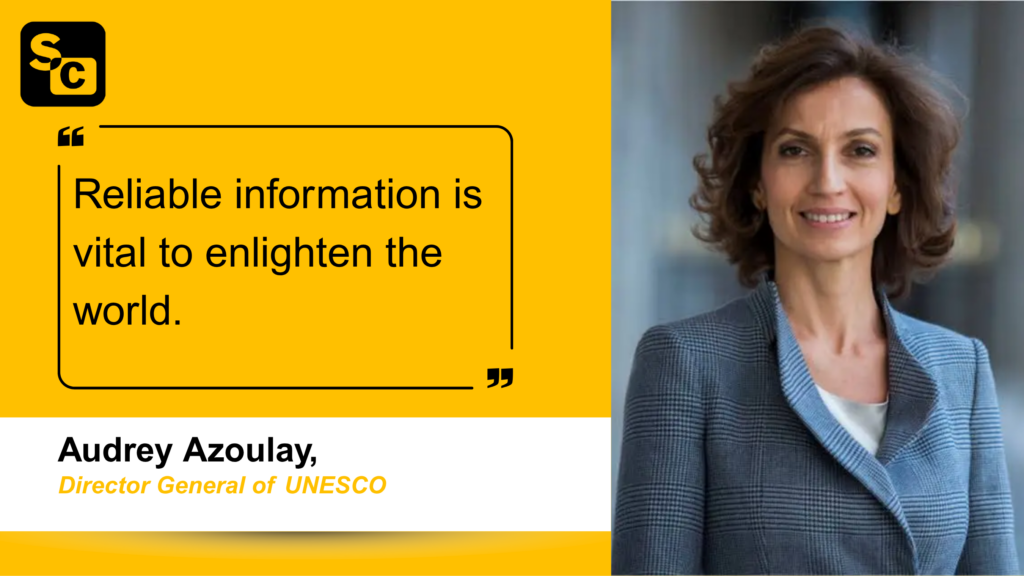
This resilience is not accidental; it is rooted in the understanding that information is power. As the Director General of UNESCO, Audrey Azoulay aptly stated, “Reliable information is vital to enlighten the world.” Without it, citizens are left navigating a landscape of uncertainty, where decisions are shaped not by facts but by manipulation and misinformation.
The digital age, while expanding access to information, has also introduced new and complex threats. Disinformation campaigns, often amplified by algorithms, blur the line between truth and falsehood. The rise of artificial intelligence has further complicated this terrain. It enables the creation of highly convincing, yet entirely fabricated, content. For journalists, this means not only reporting the news but also constantly defending the integrity of facts themselves.
Within this evolving landscape, women journalists face a distinct and disproportionate burden. In addition to traditional risks, many encounter targeted online harassment, gender-based violence, and coordinated smear campaigns. These threats, both physical and digital, highlight the urgent need for more inclusive protections in the broader fight for press freedom.
Still, stories of courage persist. Across African newsrooms, reporters continue to investigate, document, and publish. They do so with limited resources but unwavering commitment. In countries with constrained press freedom, journalists find creative ways to navigate restrictions. They use digital platforms, cross-border collaborations, and data-driven reporting to keep the public informed. Their work is a testament to the enduring belief that truth, even when challenged, remains essential.
Defending press freedom is not passive; it is an active responsibility. It requires legal frameworks to protect journalists, institutions to uphold accountability, and citizens to support independent media. When journalists are silenced, societies lose more than information: they lose transparency, trust, and the foundation of democracy.
To stand with journalists is to stand for truth. Defending media freedom means defending each person’s right to be informed, to question, and to participate in society. In a world shaped by information, safeguarding press freedom is not optional; it is essential for justice, accountability, and informed communities.
0 Comments