
A Story of Promise, Progress, and Possibility
Every four years, a familiar scene unfolds across Africa. Streets fall silent as televisions flicker to life. Neighbours gather in living rooms, restaurants, community halls, and roadside kiosks. Children wrap themselves in national colours while elders recount memories of tournaments past. For a few weeks, borders fade, and a continent of more than a billion people shares a common dream: that this could finally be Africa’s World Cup.
Football has long been more than a game in Africa. It is a source of identity, pride, and hope. It has inspired generations, united communities in moments of hardship, and provided a stage on which Africans have demonstrated excellence to the world. From the dusty pitches of rural villages to the packed stadiums of major cities, football tells a story of resilience and ambition that mirrors the continent itself. Every World Cup presents an opportunity for countries around the world to showcase their best talent in football. Every World Cup creates endless memories for Africa. These moments are not merely sporting achievements; they are chapters in a continental story of perseverance and possibility.
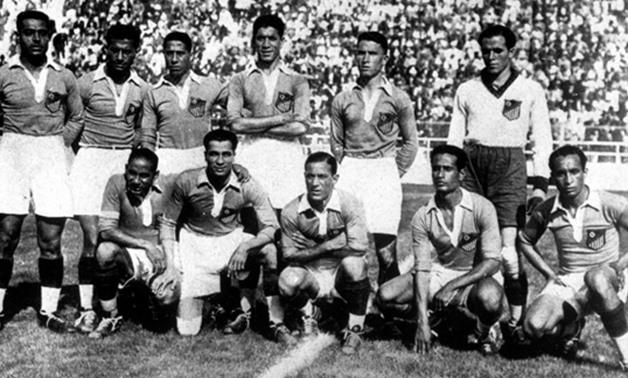
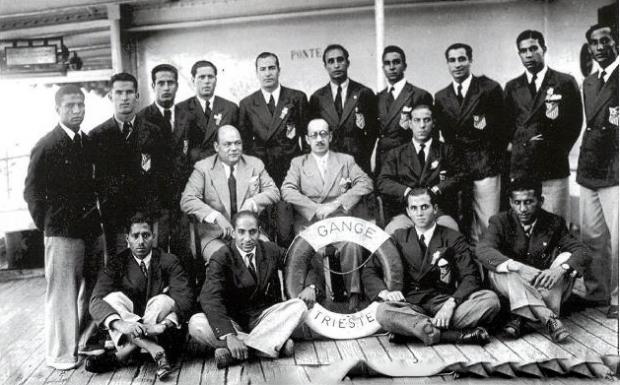 EGYPT 1934 FIFA
Africa’s relationship with the FIFA World Cup is about far more than results on the pitch. It is a story of a continent fighting for recognition in the global game, showcasing its rich cultural heritage to the world, and steadily proving its place among football’s elite. As the world turns its attention to the 2026 FIFA World Cup, Africa finds itself at an important crossroads: celebrated for its contributions to football yet still striving for equal recognition and competitive success on the sport’s biggest stage.
A record 10 teams from Africa are participating in the 2026 World Cup. The ten teams reflect both Africa’s footballing heritage and its growing competitiveness on the global stage. Their names often draw from history, geography, culture, and national identity. Morocco’s Atlas Lions, Senegal’s Lions of Teranga, Algeria’s Desert Foxes, Tunisia’s Eagles of Carthage, Egypt’s Pharaohs, Côte d’Ivoire’s Elephants, Ghana’s Black Stars, South Africa’s Bafana Bafana, the Democratic Republic of the Congo’s Leopards, and Cape Verde’s Blue Sharks each bring their own histories, identities, and aspirations to the tournament. For Cape Verde, qualification marks a historic first appearance on football’s biggest stage, highlighting the growing depth of talent emerging from across the continent.
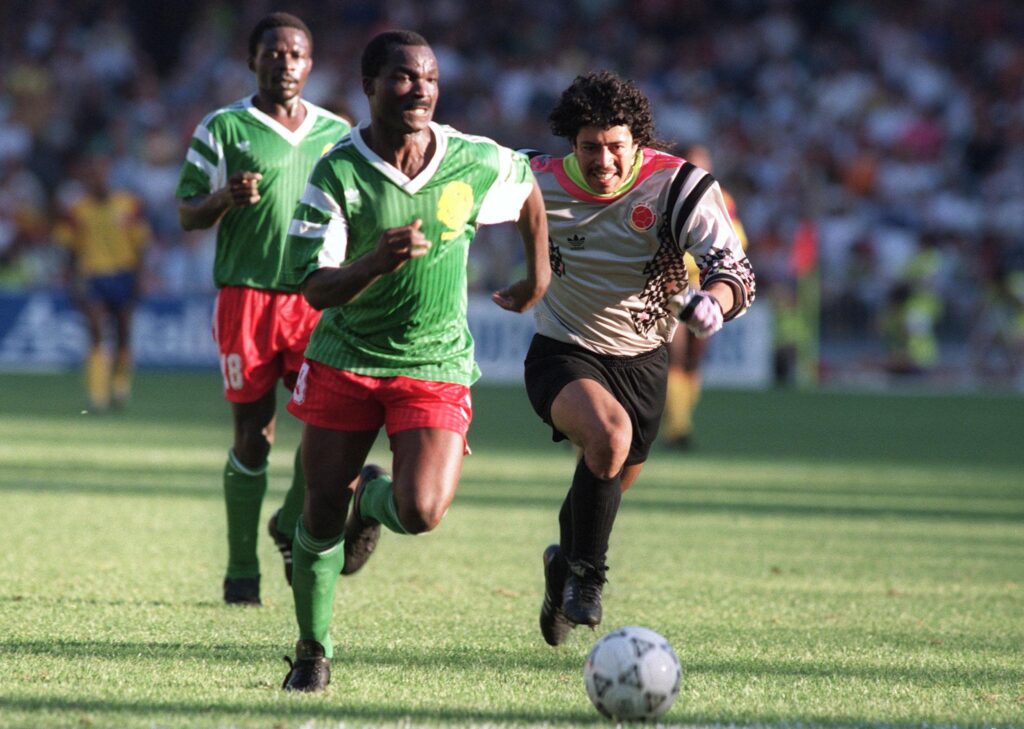
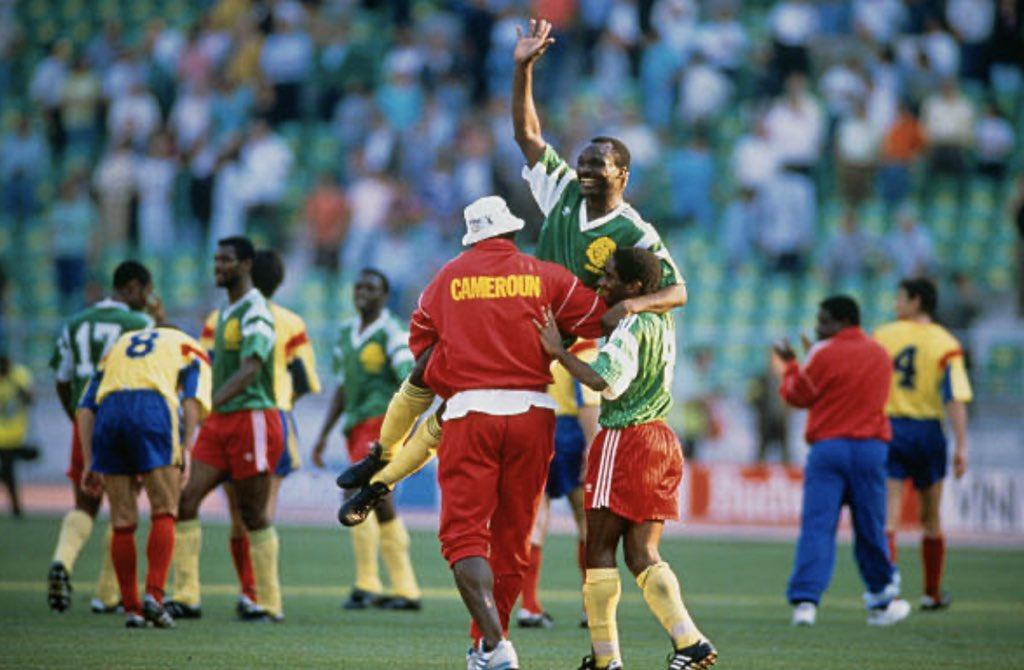 CAMEROON 1990 FIFA
Africa’s World Cup journey began in 1934 when Egypt became the first African nation to qualify for the tournament. Their participation marked a historic breakthrough for a continent that would spend decades fighting for greater representation in international football. Despite the achievement, African teams remained largely marginalised within the global football system, often competing for a limited number of qualification spots while European and South American nations enjoyed greater access to the tournament. According to FIFA’s historical records, Egypt’s qualification laid the foundation for future generations of African footballers and established the continent’s presence in the global game.
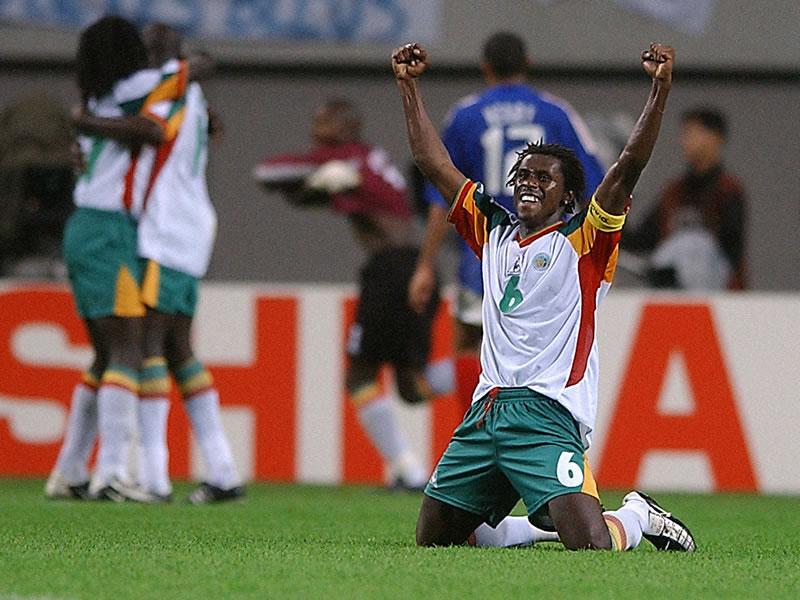
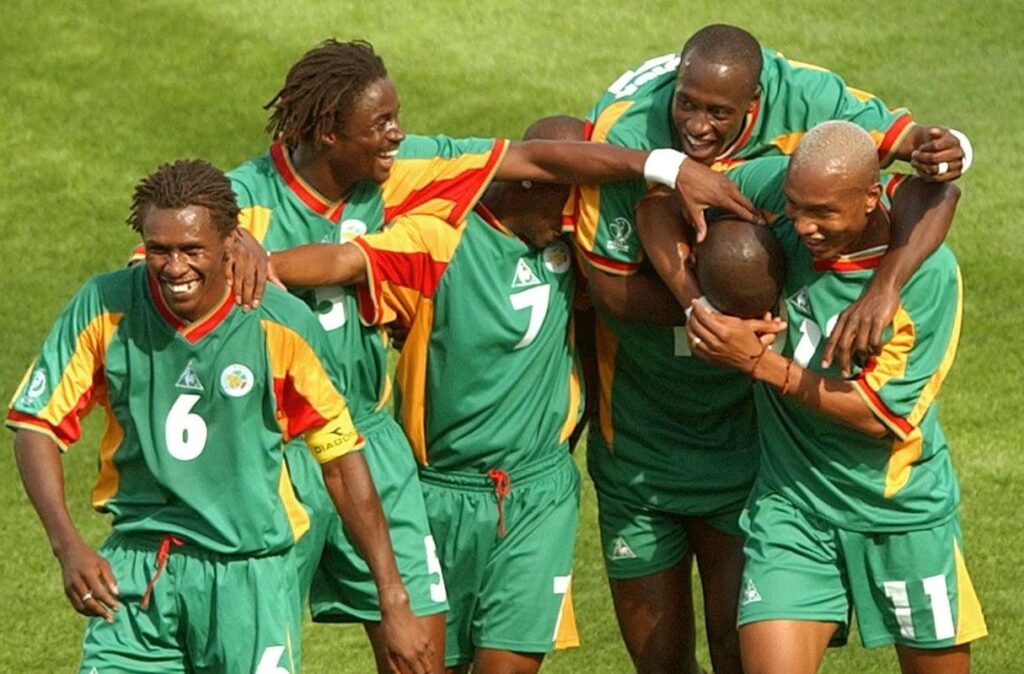 SENEGAL 2002 FIFA
For decades, African nations arrived at the World Cup carrying not only their own hopes but the aspirations of an entire continent eager to prove itself. The breakthrough came in 1990 when Cameroon stunned the world. Led by the charismatic Roger Milla, the Indomitable Lions reached the quarter-finals, defeating reigning champions Argentina in the opening match and becoming the first African team to advance so deep into the competition. Their fearless performances challenged long-held assumptions about African football and inspired a generation of players across the continent.
Twelve years later, Senegal’s Lions of Teranga arrived at the 2002 World Cup as underdogs. Few expected them to trouble France, the defending champions and one of the tournament favourites. Yet when Papa Bouba Diop scored the winning goal in a stunning 1-0 victory, Africa erupted in celebration. Senegal’s remarkable run to the quarter-finals reinforced the belief that African nations could compete with the very best.
Perhaps no World Cup moment captures both the promise and heartbreak of African football more than Ghana’s quarter-final against Uruguay in 2010. With the score tied in the dying seconds of extra time, a goal-bound header was famously handled on the line by Luis Suárez. Moments later, Asamoah Gyan’s penalty struck the crossbar. Ghana would eventually lose in the shootout, and with it, Africa’s chance of producing its first World Cup semi-finalist disappeared. Across the continent, the defeat felt deeply personal. For many Africans, Ghana’s Black Stars were no longer representing a single nation; they had become Africa’s team. Even in defeat, however, Ghana demonstrated that the continent stood on the threshold of football history.
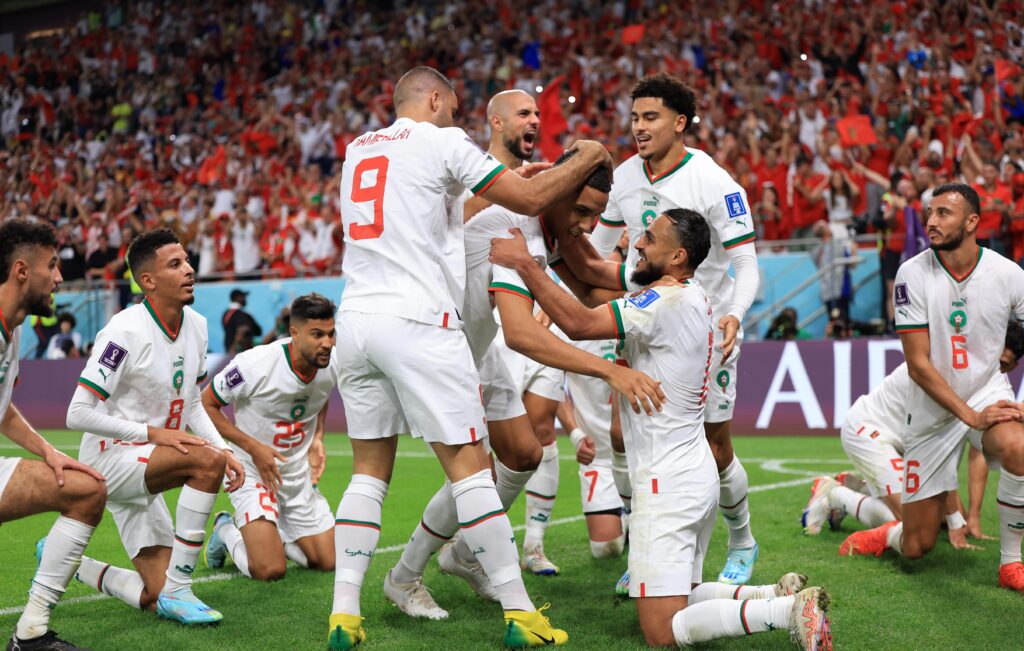
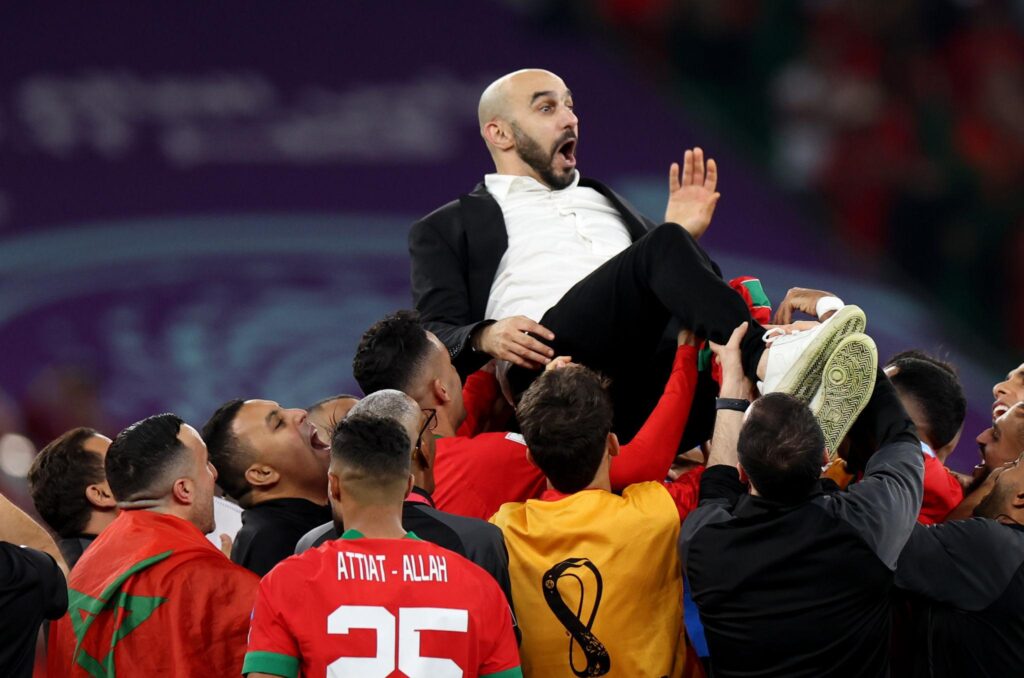
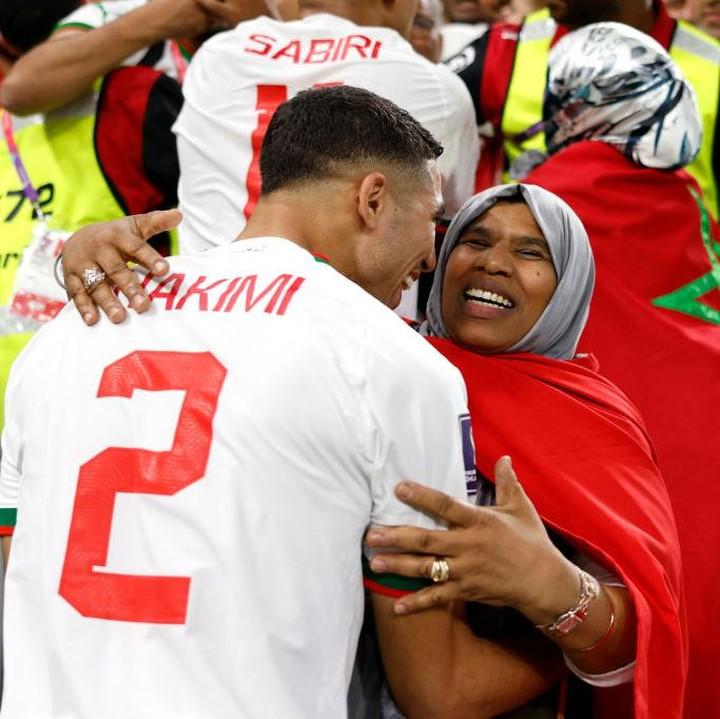 MOROCCO 2022 FIFA
That sense of possibility reached new heights in 2022 when Morocco embarked on a historic journey in Qatar. According to an article in Time magazine, few predicted that the Atlas Lions would defeat Belgium, Spain, and Portugal on their way to the semi-finals. Yet with every victory, they carried the hopes of Africa and the Arab world. Images of Moroccan players celebrating with their mothers after matches resonated far beyond football, symbolising family, sacrifice, and pride. By becoming the first African nation to reach a World Cup semi-final, Morocco shattered one of the sport’s last psychological barriers and demonstrated that African teams could compete tactically, mentally, and physically with the world’s elite.
While African teams were making history on the pitch, the continent was also pursuing another dream: hosting the world’s biggest sporting event. That dream became reality in 2004 when South Africa won the right to host the 2010 FIFA World Cup. The announcement sparked celebrations across the continent because the victory was viewed not simply as South Africa’s achievement but as Africa’s achievement. For decades, many had questioned whether an African nation could successfully host a tournament of such magnitude. South Africa’s successful bid provided a resounding answer.
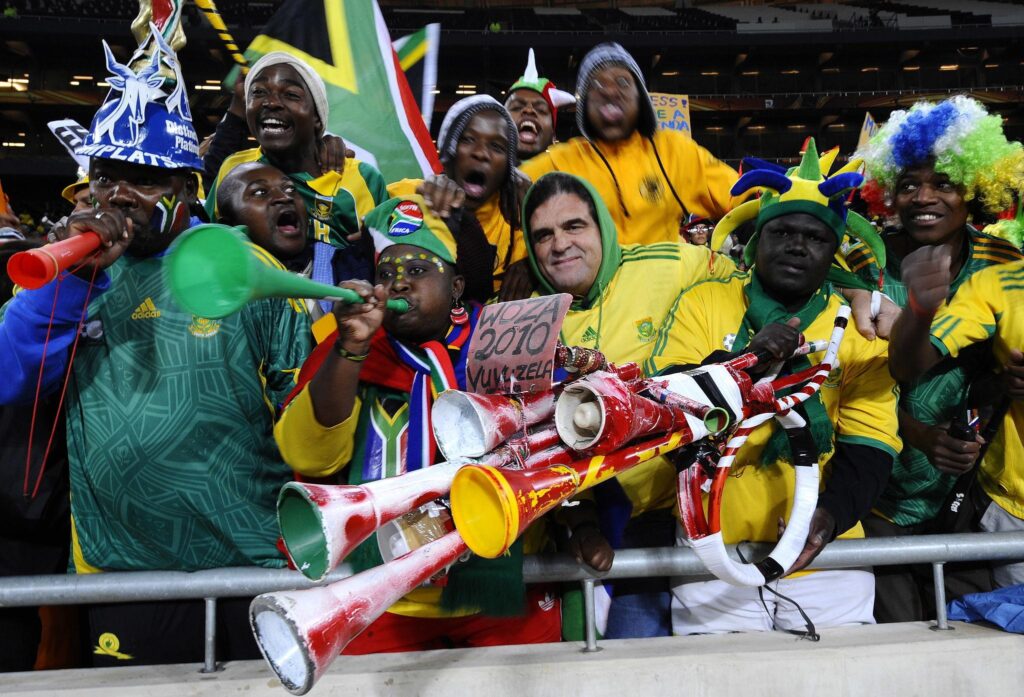
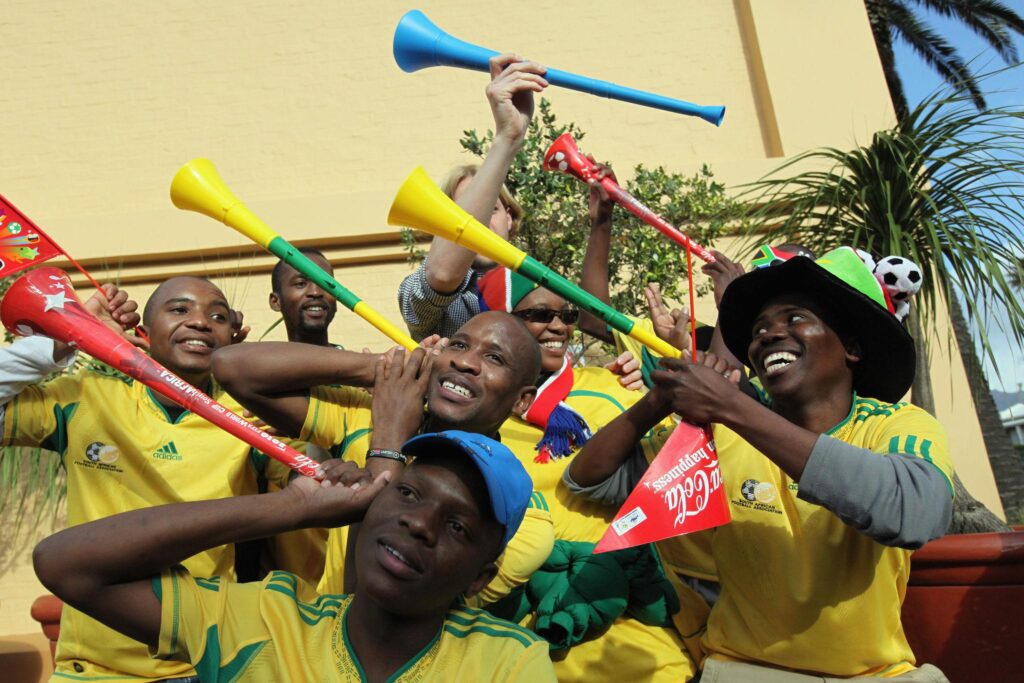
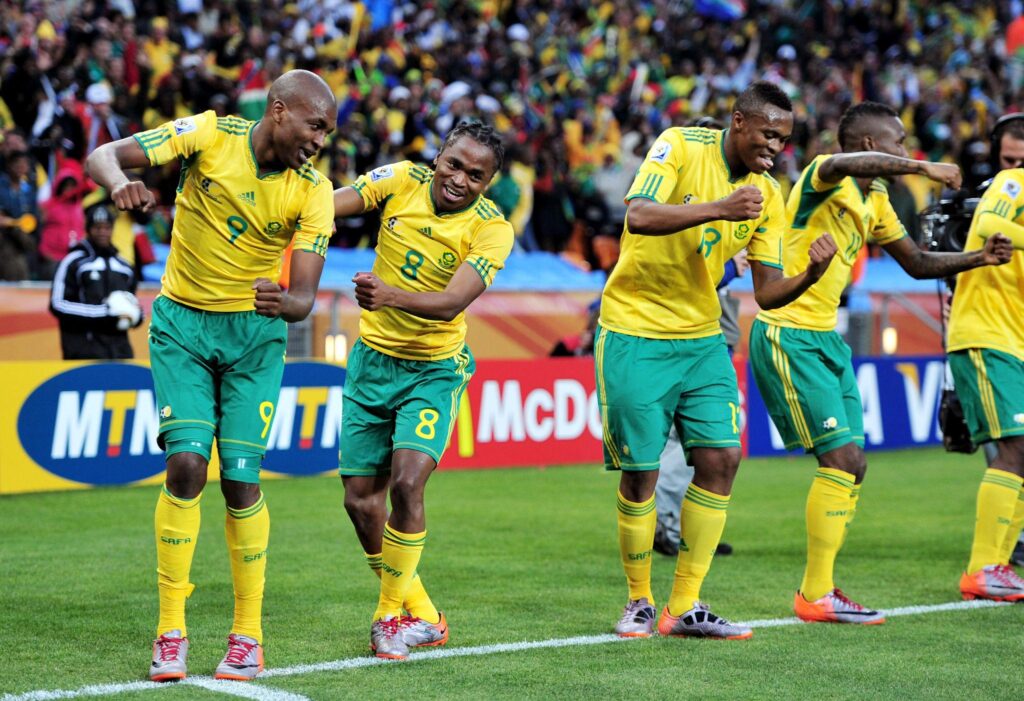 SOUTH AFRICA 2020 FIFA
When the tournament finally arrived in 2010, it delivered far more than football. The sound of vuvuzelas echoed around the globe, becoming one of the defining symbols of the tournament. The opening ceremony featured performances from artists including Hugh Masekela, Femi Kuti, the Soweto Gospel Choir, and Thandiswa Mazwai, while the official anthem, Waka Waka, performed by Shakira and South African group Freshlyground, became one of the most recognisable World Cup songs ever recorded. Through music, dance, fashion, and storytelling, Africa presented itself not as a continent seeking validation but as a vibrant cultural force with a rich and diverse heritage.
The influence of African culture at the World Cup extends well beyond South Africa 2010. African teams routinely use football’s biggest stage to celebrate national identity and cultural heritage. Team kits increasingly feature indigenous patterns and local symbolism, while supporters transform stadiums into showcases of African music, dance, language, and art. Every tournament provides an opportunity for the continent to tell its story through culture as much as through competition. As African teams participate in the 2026 World Cup, they continue to serve as ambassadors not only for their nations but also for African tourism, fashion, music, creative industries, and cultural heritage.
Researchers examining FIFA’s qualification structures have frequently highlighted disparities in representation and access that have limited African participation over the years. Although the expansion of the 2026 World Cup to 48 teams increases Africa’s allocation, some observers believe the continent still faces structural challenges that extend beyond the number of qualifiers.
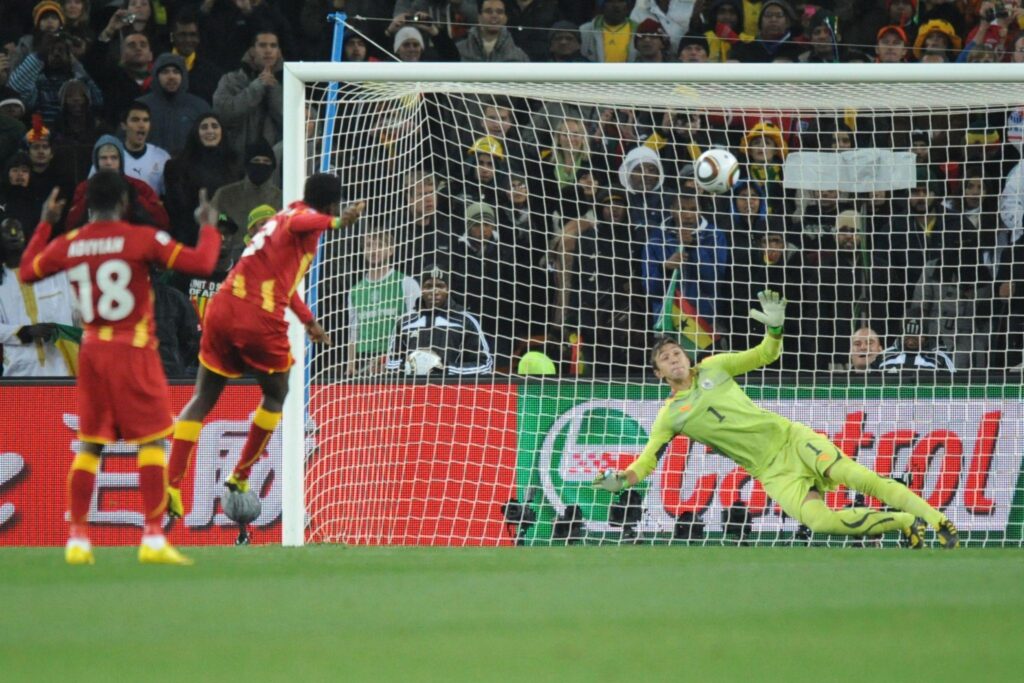
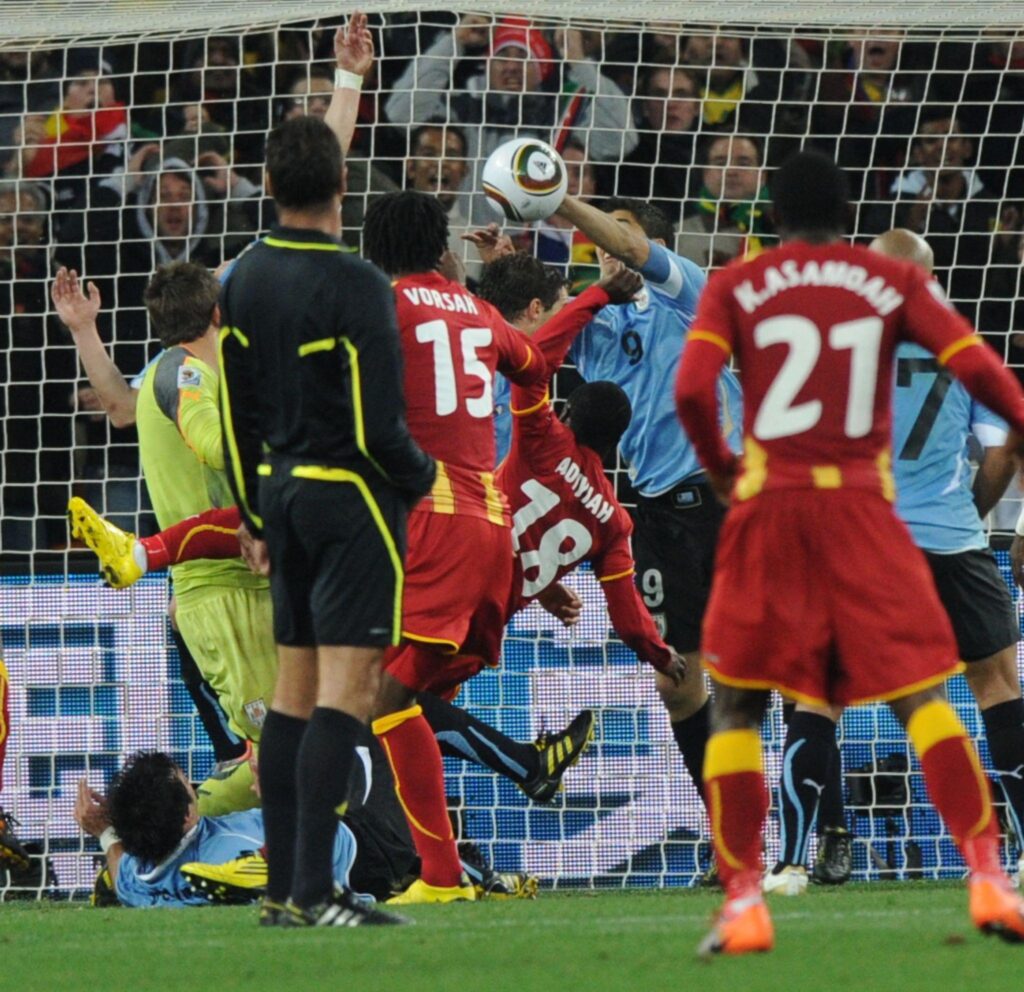
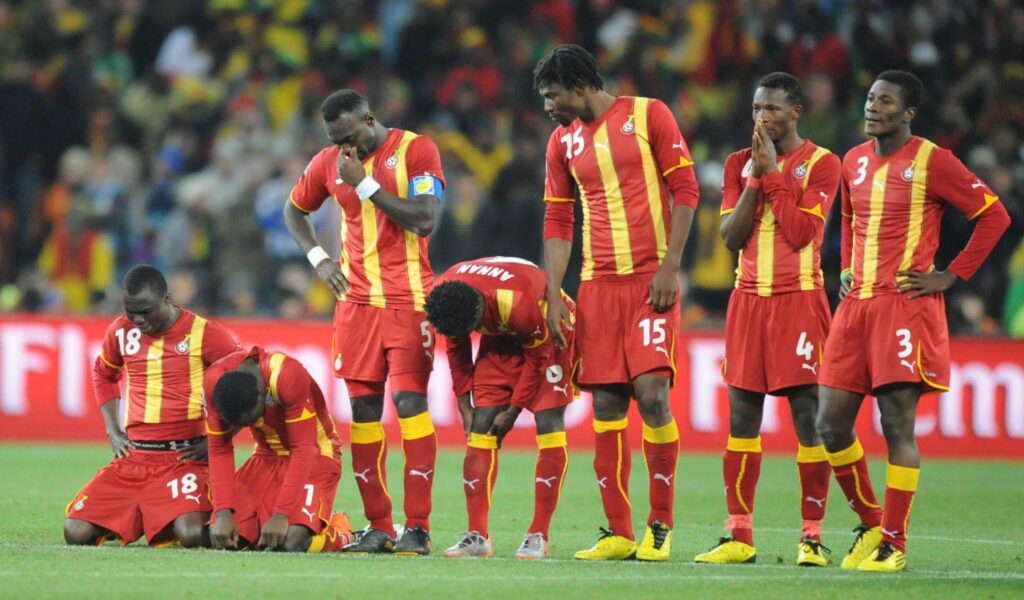 GHANA 2010 FIFA
Economic realities have always shaped Africa’s football fortunes. Many national federations operate with fewer financial resources than their counterparts in Europe, which limits investment in coaching, youth development, sports science, and domestic league infrastructure. As a result, many of Africa’s most talented players leave for Europe at a young age, developing their careers within foreign football systems rather than strengthening domestic competitions. While this migration has produced world-class stars, it has also contributed to concerns about long-term football development across the continent. This has resulted in talented players changing allegiance to European countries; France won the 2018 World Cup, but 14 players were from Africa, accounting for 60% of the total.
Looking ahead, Africa’s ambition should extend beyond participation. The continent possesses the population, talent base, football culture, and growing infrastructure necessary to mount another successful bid to host the World Cup. A future bid would require coordinated political support, substantial investment, regional cooperation, and a compelling vision that reflects Africa’s modern realities. The success of the 2010 South Africa World Cup proved that Africa has the capacity to host the world’s largest sporting event. The next challenge is ensuring that another African nation or perhaps a joint African bid brings the tournament back to the continent.
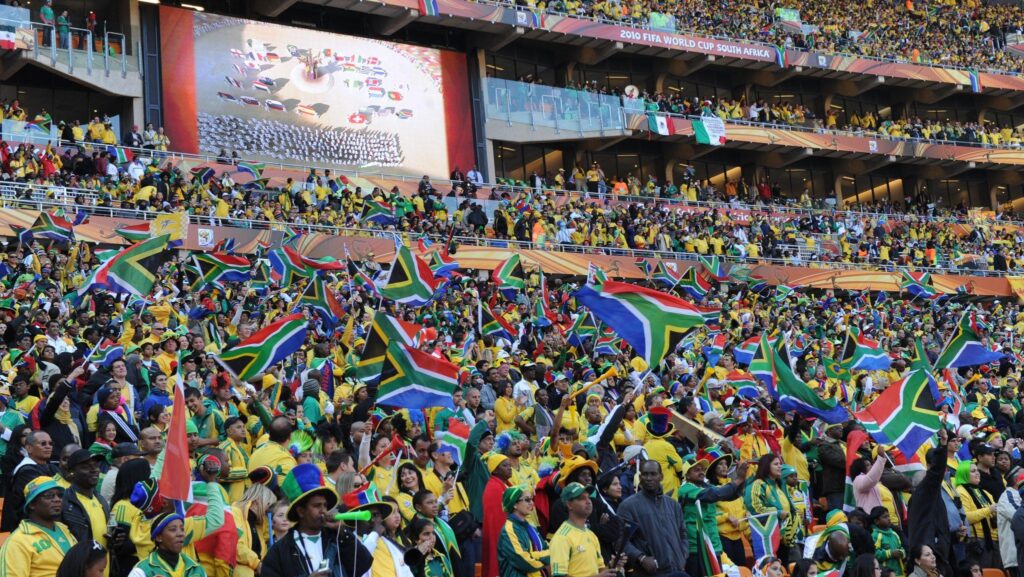
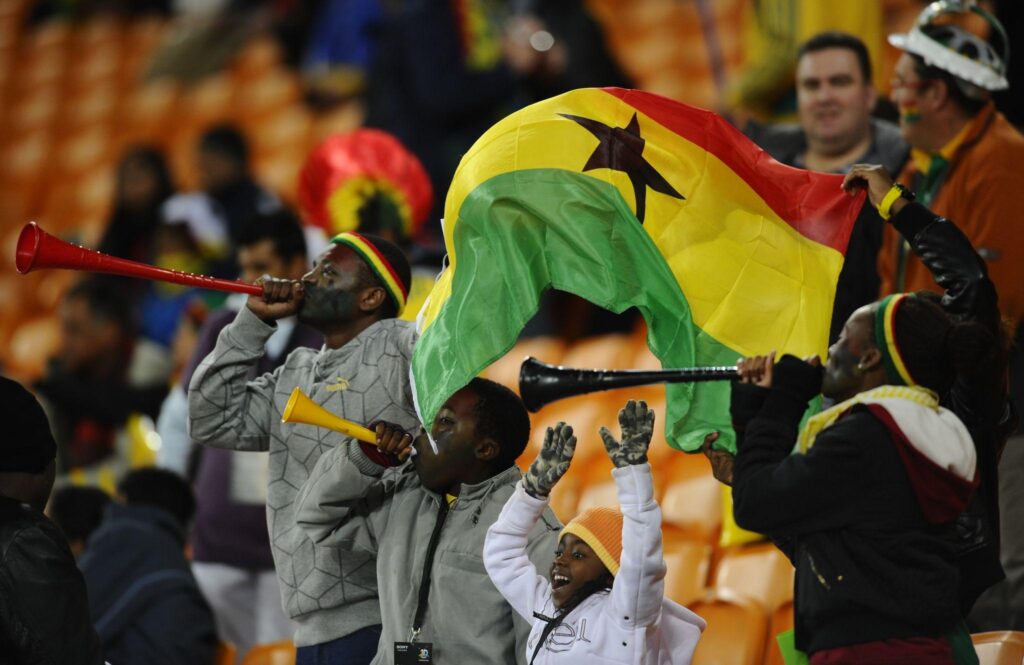 South Africa and Ghana Fans
The story of Africa at the World Cup is not simply a story about football. It is a story about representation, opportunity, cultural expression, and global influence. Through its players, artists, supporters, and communities, Africa has helped shape the identity of the modern World Cup. From Egypt’s pioneering appearance in 1934 to Cameroon’s heroics in 1990, Senegal’s shock victories in 2002, Ghana’s heartbreak in 2010, Morocco’s history-making run in 2022, and South Africa’s successful hosting of the world’s greatest football tournament, Africa’s World Cup story has been one of steady progress against all odds. As the continent prepares for the 2026 tournament, its influence will once again extend beyond the football pitch. The official World Cup song, Dia Dia, brings together Shakira, whose Waka Waka provided the soundtrack to South Africa 2010, and Nigerian superstar Burna Boy, a reminder of Africa’s presence at the World Cup.
Now, as ten African teams- Algeria, Cape Verde, DR Congo, Egypt, Ghana, Ivory Coast, Morocco, Senegal, South Africa, and Tunisia prepare to take the world’s biggest football stage, a new chapter is waiting to be written. Whether it ends in a historic first title or another unforgettable moment, Africa is not just participating in 2026. It is arriving with something to prove.
0 Comments