
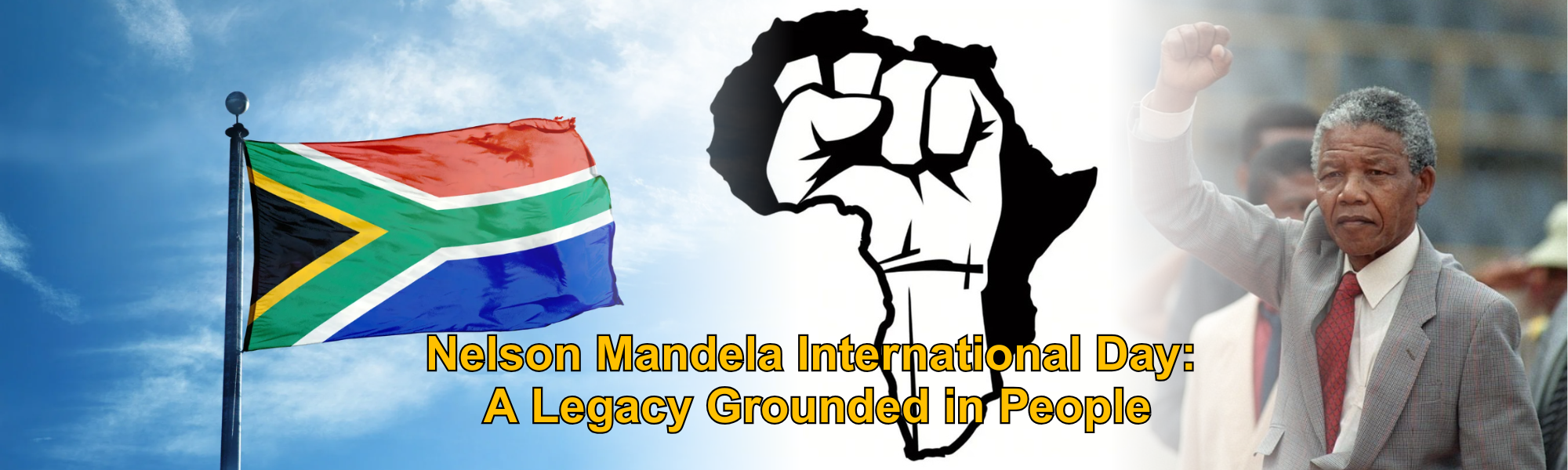
Nelson Rolihlahla Mandela!
The name Rolihlahla is often translated as ‘troublemaker’. His life went on to reflect something far more grounded in justice and humanity. He did not create disruption for its own sake. He challenged injustice, questioned systems, and stood firmly for equality. In doing so, he came to be known as a ‘peacemaker’, guided by a deep sense of fairness, dignity, and a commitment to humanity.
Mandela was a South African anti-apartheid activist, lawyer, and political prisoner who spent 27 years in prison for his role in the struggle against apartheid. He later became the first Black president of South Africa from 1994 to 1999, leading a nation through a period of transition focused on reconciliation, democracy, and social reform. His work, alongside F.W. de Klerk, earned him the Nobel Peace Prize in 1993, and his leadership continues to be recognised globally as a symbol of justice and forgiveness.
This legacy led to the recognition of Nelson Mandela International Day, marked each year on 18th July, his birthday. The day is not only about remembering his life, but about reflecting on the values he stood for and how they continue to shape the world today.
At the centre of Mandela’s life were guiding principles that remain relevant across generations. Education, reconciliation, entrepreneurship, leadership, and a deep belief in people were not abstract ideas, but lived experiences that shaped how he engaged with society.
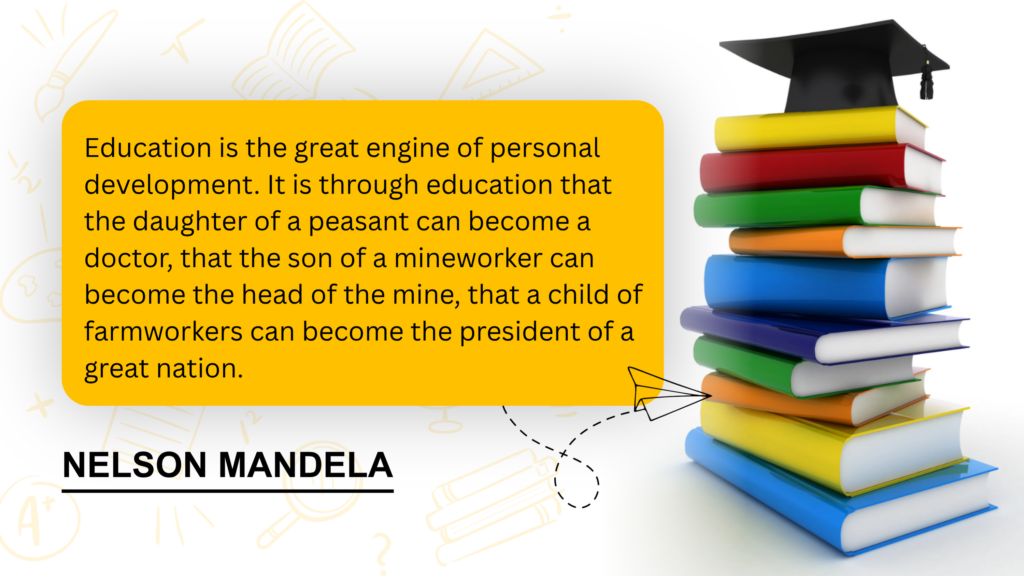
This perspective holds that opportunity should not be limited by circumstance. It shows how education can shift what is possible, opening pathways for individuals to grow, lead, and contribute meaningfully to society.
Today, this belief continues to take shape through initiatives such as the Mandela Rhodes Foundation. Through its scholarship and leadership development programmes, the Foundation brings together young Africans from across the continent, creating space for learning, reflection, and values-driven leadership. By supporting students from countries such as South Africa, Kenya, Nigeria, and beyond, the programme reflects a broader vision of Pan-African connection, where education is not only about individual achievement but also about shared progress across the continent.
Mandela’s legacy is also recognised globally through the Nelson Rolihlahla Mandela Prize, awarded by the United Nations every five years to individuals who have dedicated their lives to the service of humanity. It honours those who reflect his values in action, reinforcing the idea that lasting change is shaped by people and their commitment to others.
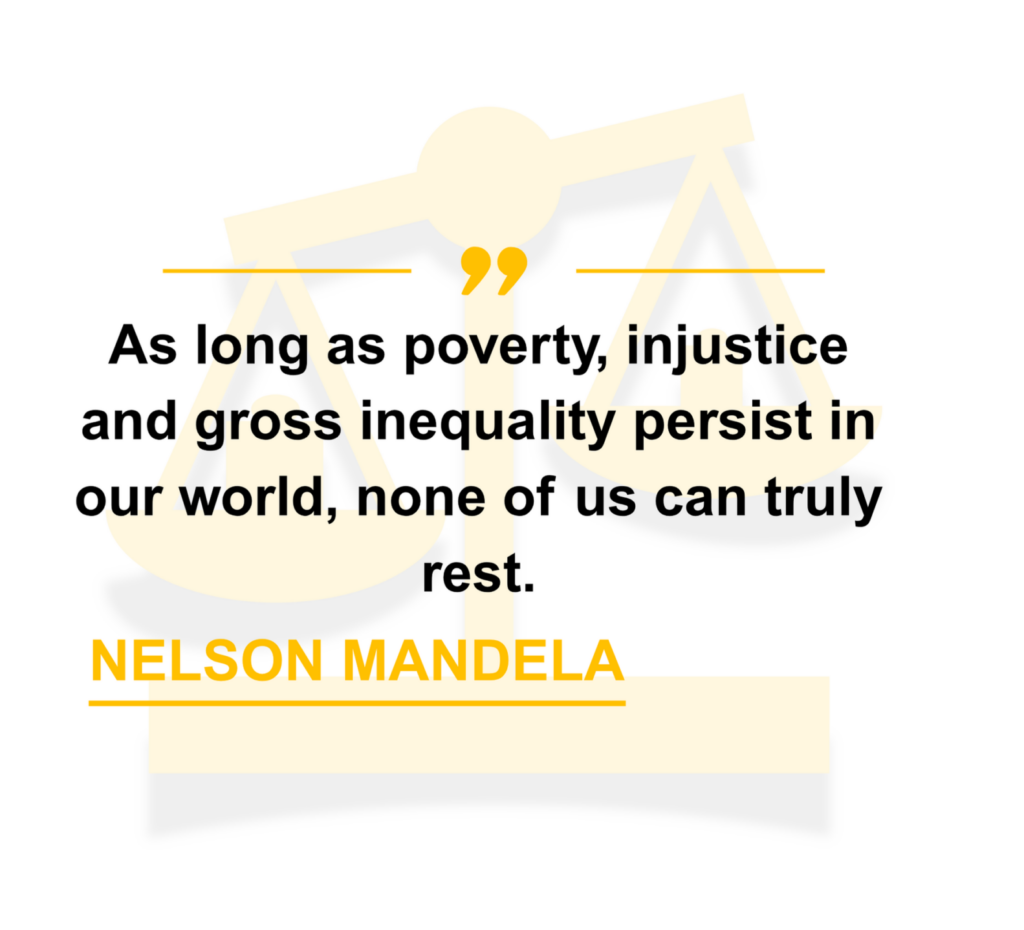
This perspective continues to influence how we understand impact today. Mandela believed that change begins with people, in communities, in everyday actions, and in the ways individuals respond to the challenges around them. His legacy is not distant. It is present in the choices people make and in the ways they continue to shape the world around them.
Through our #GroundedInPeople campaign, we are reminded that meaningful change is rooted in humanity. It is reflected in how people connect, how they lead, and how they contribute to the spaces around them. Mandela’s life shows that leadership is not only about position but about purpose and the people it serves.
Nelson Mandela International Day is, at its core, a call to action. It reminds us that change begins where we are, in the choices we make and in how we show up for others.
To explore his life and legacy further, you can start by testing your knowledge through the UN’s interactive Nelson Mandela International Day Quiz. If his story stays with you, consider what that might look like in your own context, whether through sharing this or taking one step that reflects the values he stood for.
0 Comments
Trackbacks/Pingbacks